A sloping garden can turn a straightforward build into a drawn-out groundwork job. If you are weighing up why choose screw piles for uneven ground, the answer usually comes down to speed, accuracy and far less disruption on site.
For garden rooms, annexes and similar outdoor structures, uneven ground is one of the most common reasons traditional foundations become slow and messy. Digging out high spots, filling low areas, carting spoil away and waiting on concrete all add time, cost and uncertainty. Screw piles solve that problem differently. They work with the levels you have, rather than forcing the whole site into a flat excavation.
Why choose screw piles for uneven ground?
Uneven ground exposes the weaknesses in conventional foundation methods. The more the site falls away, the more excavation, levelling and material handling is usually needed before the structure above can even start. That is where screw piles make sense.
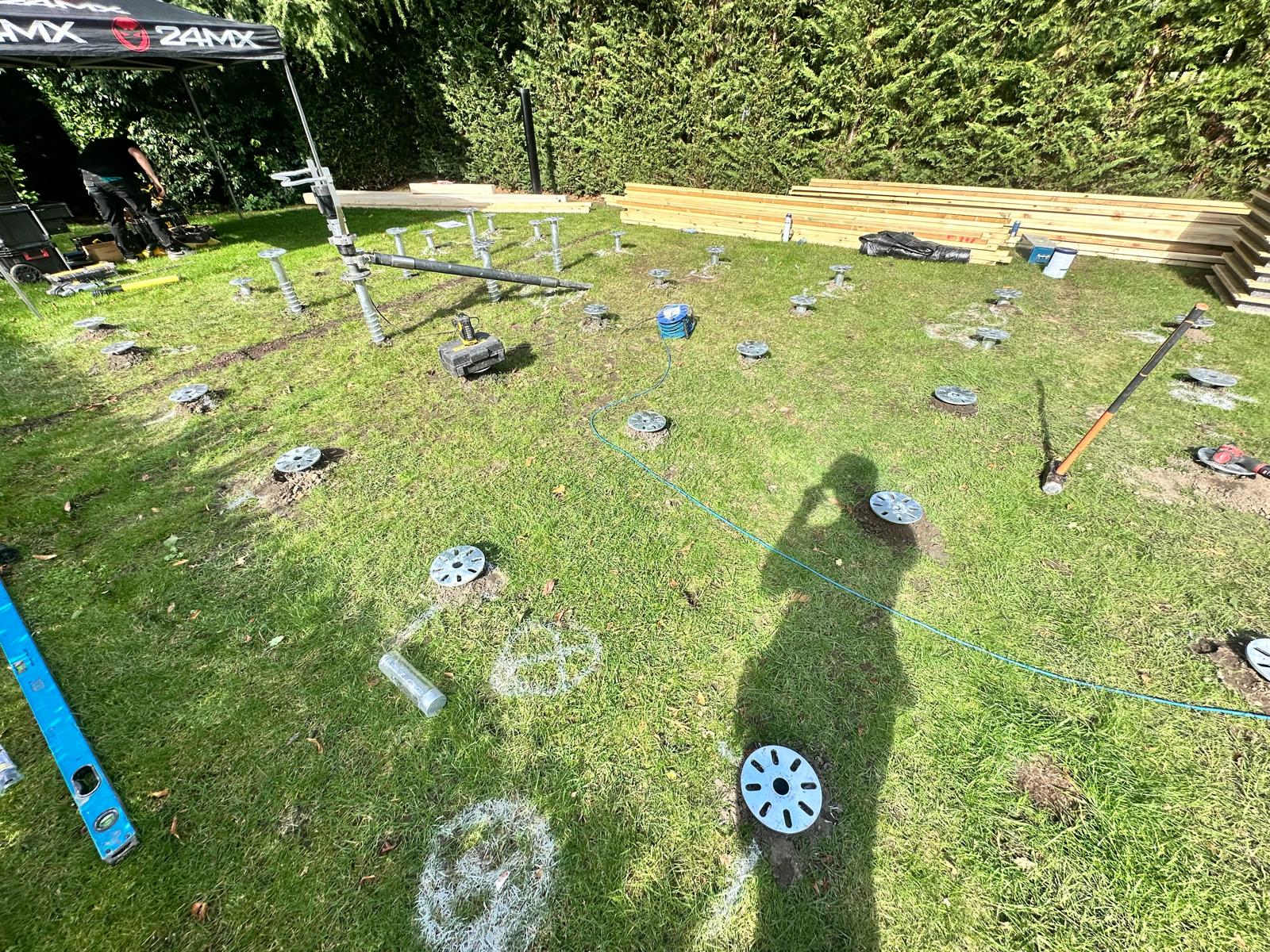
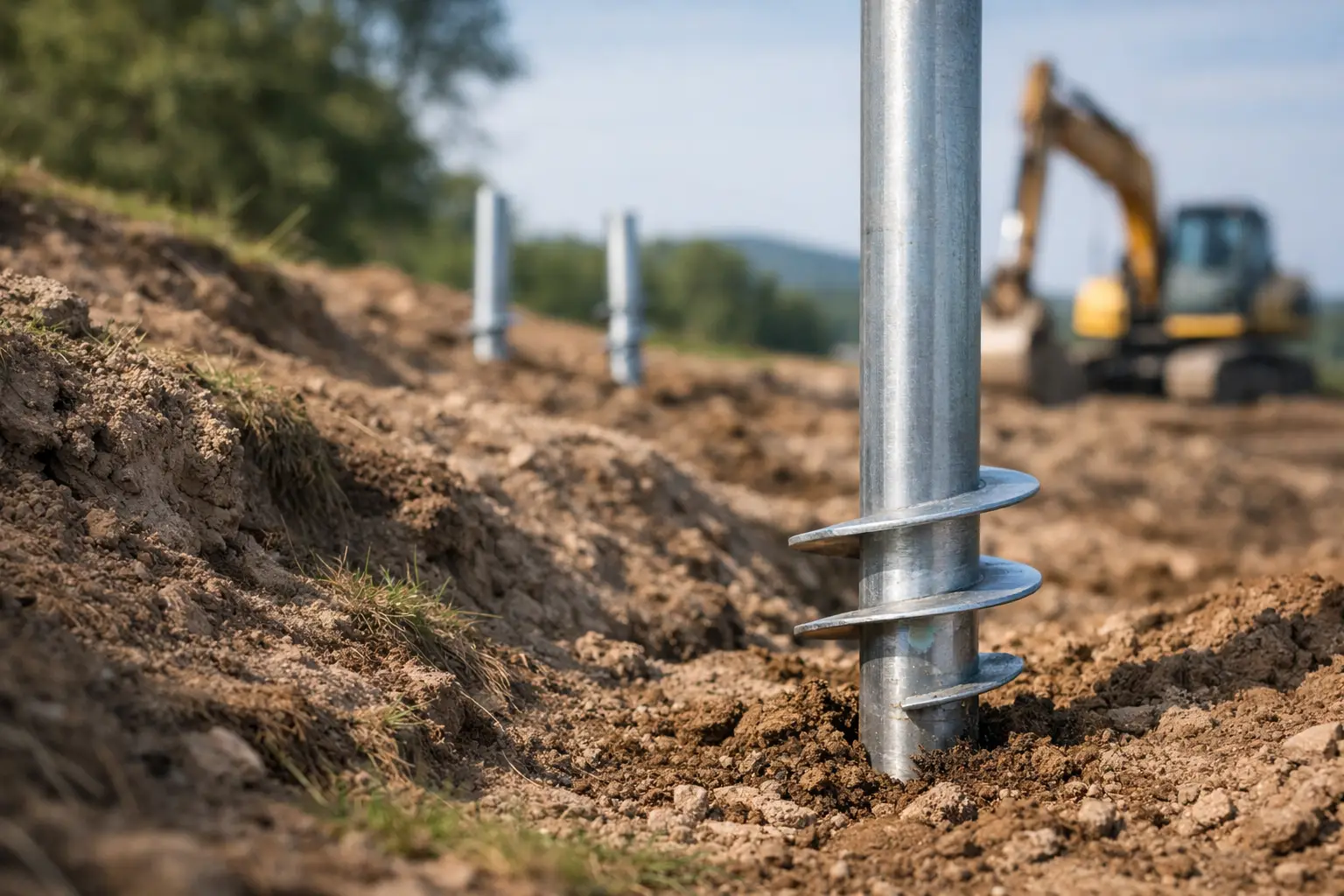
A screw pile is driven into the ground to a calculated depth and load requirement. Each pile can be installed to suit the specific level at that point on site, which allows the finished foundation to be brought back to a level, square, build-ready plane. In practical terms, that means a sloping or inconsistent garden does not automatically mean major groundwork.
This matters because most garden room projects are not happening on open building plots. They are happening in lived-in gardens, with fences, planting, limited access and clients who do not want the place turned into a muddy excavation. A screw pile system cuts out a lot of that disruption.
The main advantage is precision, not just convenience
People often focus first on speed, and rightly so. Screw piles are fast to install and ready to build on the same day. But on uneven ground, precision is just as important.
Every structure above relies on the foundation layout being correct. If positions are out, if levels are inconsistent or if the base is not square, the build that follows becomes harder. Floors need packing. Frames need adjustment. Time gets lost. On a sloping site, those risks increase when the groundwork method is less controlled.
With screw piles, the foundation is set out to the project requirements, then installed at exact points. Brackets and pile heights are adjusted to achieve the required finished level. The result is a system designed around the structure, not a rough platform that still needs correction later.
For garden room builders and installers, that accuracy has obvious value. It protects programme, reduces site fixes and makes the handover from foundation to superstructure cleaner.
Why screw piles suit sloping gardens so well
A slope changes more than just the visual level of the site. It affects access, drainage, spoil removal and the amount of labour needed to prepare the area. Concrete foundations can still be used on uneven ground, but they often become more involved than clients expect.
That might mean stepped excavation, shuttering, retaining considerations or larger pours to make up level differences. On some sites, it is manageable. On others, it is simply overkill for a garden room or annexe.
Screw piles suit these sites because they transfer load into the ground without needing broad excavation across the full footprint. You are not trying to reshape the whole plot. You are creating strong load-bearing points exactly where they are needed.
That approach is especially useful where access is restricted. If materials and machinery have to come through a side passage or across an occupied garden, reducing muck-away and wet trades becomes a major advantage.
Less mess, less downtime, less friction
Uneven ground tends to make messy jobs messier. More digging means more spoil. More spoil means more handling, more protection for surrounding areas and more chance of damaging lawns or finished landscaping.
Screw piles avoid most of that. There is no need to excavate trenches or remove large volumes of soil. There is no concrete wagon to coordinate, no waiting for a pour and no cure time before the next phase starts.
That has a direct effect on project flow. Install the piles, check levels, complete the foundation, and the structure above can move forward straight away. For professional builders, that means tighter scheduling. For property owners, it means fewer days of disruption and less mess left behind.
This is one of the reasons screw piles are so effective for domestic settings in the South East. Many sites are tight, enclosed and already finished with paving, planting or boundary treatments. Clean installation is not a nice extra. It is a practical requirement.
Ground conditions still matter
Screw piles are not a magic fix for every site. They are highly effective on uneven ground, but the right specification still depends on what is under the surface.
Soil type, bearing capacity, moisture levels and load requirements all matter. A shallow decorative garden room has different demands from a larger annexe. A site with straightforward ground is different from one with made ground, soft spots or obstructions.
That is why specialist assessment matters. The correct pile length, diameter and bracket arrangement need to be chosen for the project, not guessed. Competent installers also check installation torque and can carry out load testing where required, so the system is verified rather than assumed.
This is where category experience makes a difference. Garden rooms have specific load patterns, footprint sizes and build tolerances. Foundation design needs to match the structure above, not just the ground below.
When concrete may still be considered
There are cases where concrete remains a viable option. If a site is open, access is easy, the ground is already flat and the programme has plenty of slack, a traditional foundation may be acceptable. Some clients simply prefer what they know.
But uneven ground changes that calculation. The more site preparation required, the more attractive screw piles become. What starts as a basic concrete job can quickly turn into excavation, retaining work, additional labour and wet weather delays.
There is also the issue of readiness. Even a well-executed concrete base can hold up the build while curing and final checks are completed. Screw piles remove that waiting period. On projects where scheduling matters, that alone can justify the choice.
So the trade-off is not just about upfront method. It is about total project efficiency. On sloping or awkward sites, screw piles often reduce enough friction to make them the more practical option overall.
Why choose screw piles for uneven ground on garden room projects?
Because garden room builds demand consistency. The structure is usually manufactured or framed to defined dimensions, and it needs a level, square base to go down properly. Uneven ground introduces risk at the first stage. A poor foundation setup creates problems that continue all the way through the build.
Screw piles address that risk early. They allow precise placement, controlled levels and a foundation system that is ready when the installer is ready. No excavation. No cure time. No unnecessary hold-ups.
For contractors, that means fewer variables on site. For homeowners, it means the garden is not turned upside down for a small-to-medium structure. For both, it means a cleaner route to a build-ready base.
That is why specialist installers increasingly use screw pile systems not as a niche alternative, but as the default solution for many garden rooms, annexes and outdoor buildings. When speed, access and accuracy all matter, the advantages are hard to ignore.
The value of getting it done properly
On paper, uneven ground can make any foundation method look workable. In practice, the installation standard is what matters. Setting out, pile specification, ground assessment and finished levels all need to be right.
A properly installed screw pile foundation should not feel like a compromise. It should feel like the most direct route to a solid result. That is the difference between using the product and understanding the system.
For clients and trade partners, the real benefit is certainty. You know where the piles are going. You know the build level. You know the next stage can start without waiting around for the groundworks to catch up.
That is exactly why many builders and property owners choose Ground Down for these projects. The requirement is rarely complicated. They need a foundation that works on awkward ground, turns up on schedule and is ready to build on the same day.
If your site falls away, has mixed levels or simply makes traditional groundwork look like more trouble than it is worth, screw piles are usually the cleaner answer. The best foundation choice is the one that keeps the whole project moving.