If you are planning a garden room, annex or similar outdoor build, one of the first questions is usually simple: what are ground screws used for, and are they right for this job? Fair question. The foundation choice affects everything above it - cost, programme, access, accuracy and how quickly the structure can go up.
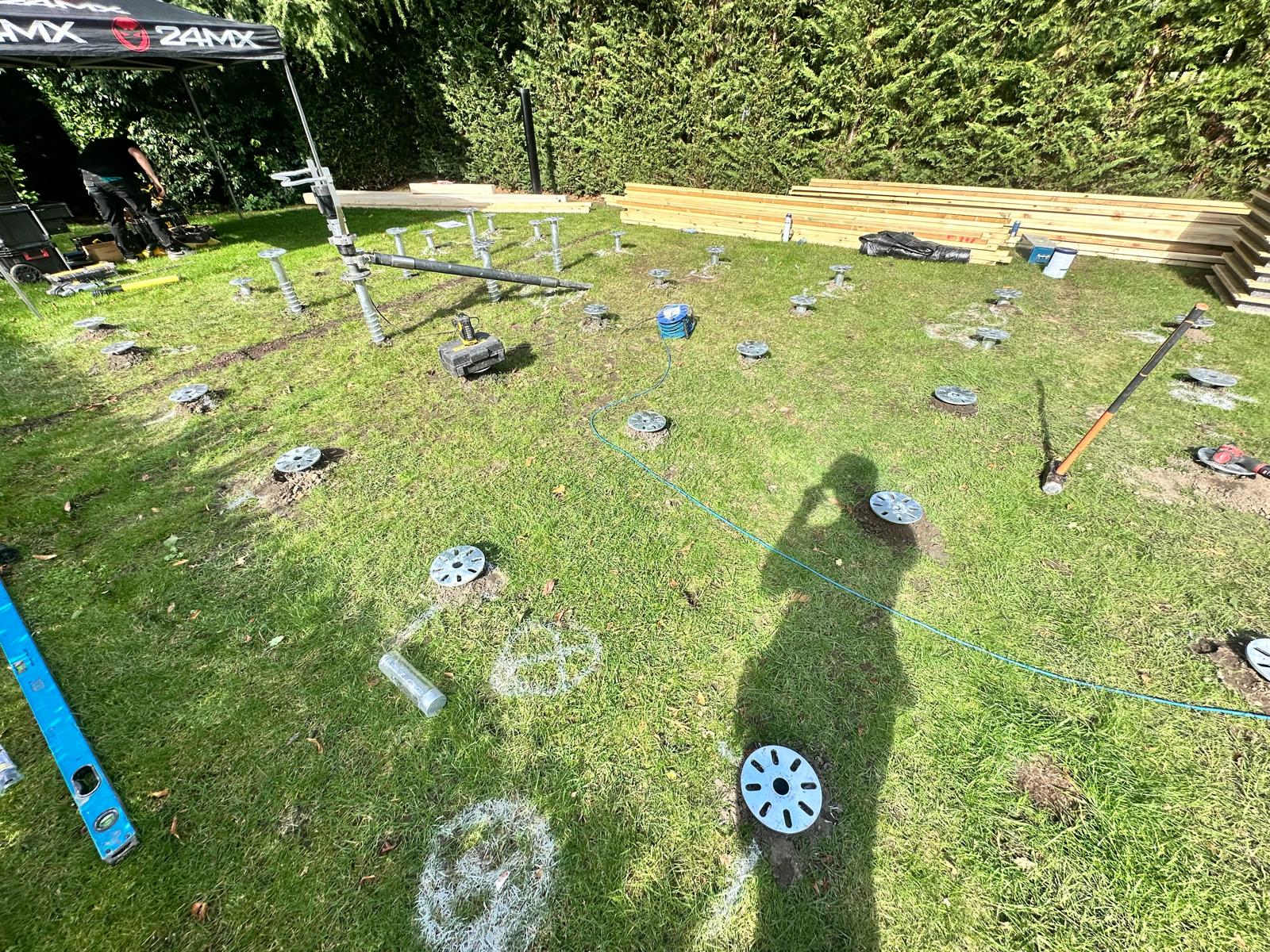
Ground screws are used to create strong, load-bearing foundations without pouring concrete. They are installed mechanically into the ground, set out to precise positions and levels, and left ready to support the subframe straight away. No excavation. No spoil heaps. No waiting for concrete to cure.
For the right project, that changes the pace of the whole build.
What are ground screws used for in practice?
In practical terms, ground screws are used anywhere you need a stable foundation for a lightweight to medium-weight structure. They are especially common under garden rooms, home offices, annexes, modular buildings, timber-framed structures, verandas, sheds and some commercial units.
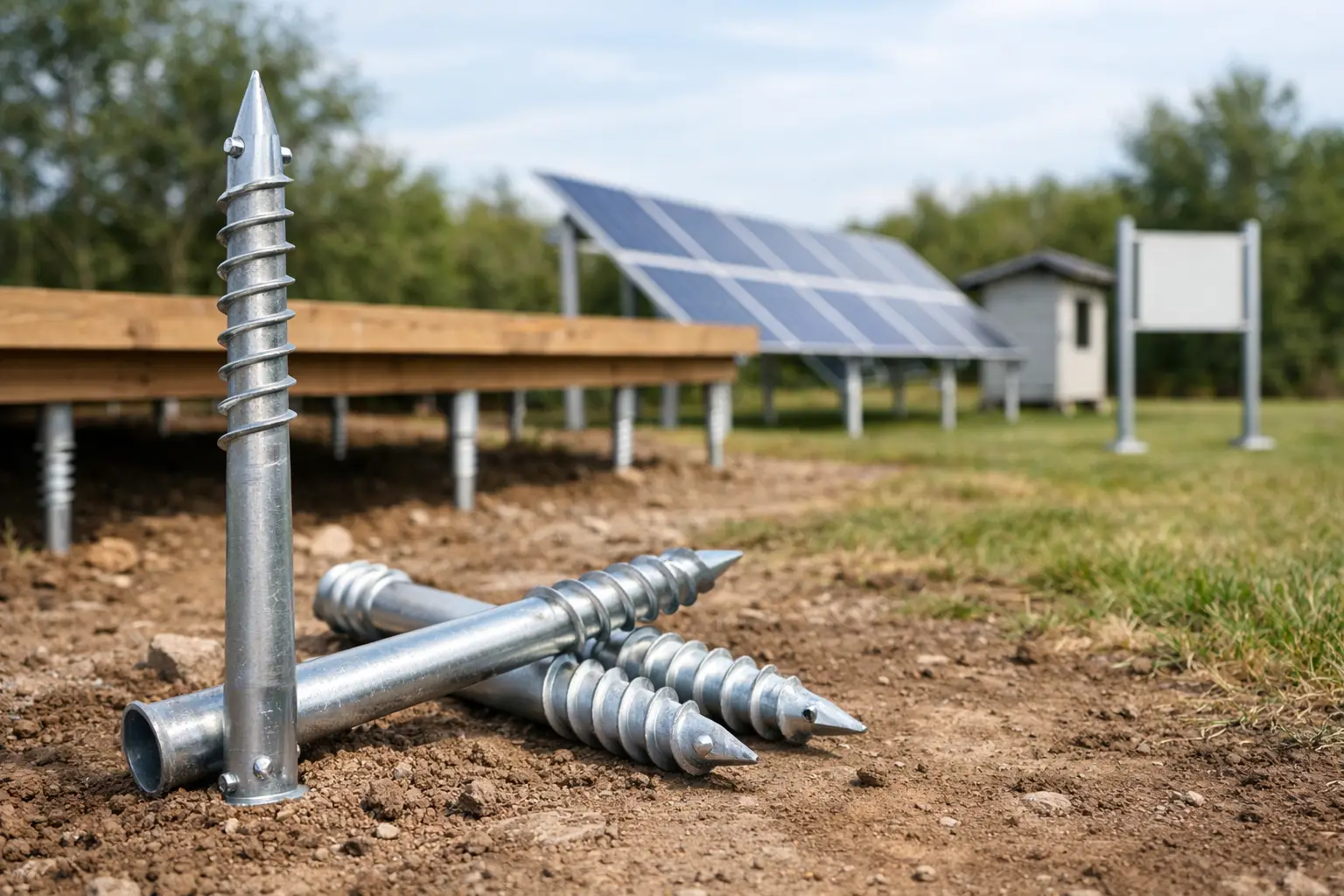
They work by transferring load from the building into the ground through steel screw piles installed to the required depth. Once installed, brackets or heads connect the screws to the frame above. The result is a level, square and build-ready base.
For garden room projects, this matters because the tolerance on the foundation affects the whole installation. If the base is out, the frame is out. Doors, glazing, roof lines and finishes all feel it later. A properly specified and installed ground screw system avoids that domino effect.
Why ground screws are often used instead of concrete
Concrete has been the default foundation option for years, but it brings delays and disruption. You need excavation, materials delivery, wet trades, spoil removal and cure time. If weather turns, the schedule slips. If access is tight, the job gets harder.
Ground screws remove most of that friction. Installation is fast. The site stays cleaner. You can often install and build on the same day. For builders and clients trying to keep a programme moving, that is a major advantage.
They are also useful where you want to minimise disturbance to the garden. There is no need to dig out large sections of ground, no concrete washout, and no broad area of site mess to make good afterwards. On domestic sites, that can be the difference between a tidy project and a drawn-out headache.
That said, this is not about pretending concrete never has a place. Heavy structures, unusual load cases or specific ground conditions may still point towards another solution. The right answer depends on the structure, the soil and the site.
Common uses for ground screws
The most obvious use is under garden rooms and garden offices. These buildings need a reliable foundation, but they rarely need the disruption of a traditional concrete slab. Ground screws suit the category well because they support timber or steel subframes accurately and keep the building lifted clear of surface moisture.
They are also used for annexes and larger insulated garden buildings. In these cases, proper load assessment matters. Screw size, length, diameter and bracket type all need to match the design loads and site conditions. This is where specialist specification becomes important rather than simply choosing a generic screw.
Decking and raised platforms are another good fit, particularly on uneven ground. Instead of trying to excavate and level large areas, the screws can be installed to varying depths and finished to a common level above. That saves time and can reduce the amount of groundwork needed.
Pergolas, canopies and other external structures can also sit on ground screws, especially where speed and clean installation are priorities. The same applies to some fencing, boardwalks, bin stores, cycle shelters and modular pods.
For trade customers, the appeal is consistency. For homeowners, it is usually a cleaner job and less waiting around.
Where ground screws work particularly well
Ground screws tend to make the most sense on sites where access is restricted, the programme is tight or the finished result needs to be accurate from the start. Many back gardens in South East England are not ideal for bulk excavation and wet concrete works. Narrow side access, established landscaping and occupied homes all push the project towards a less disruptive foundation method.
They also work well where the ground is not perfectly level. A sloping site often makes concrete more labour-intensive. With screw piles, the installer can accommodate changes in level through the set-out and bracket arrangement rather than reshaping the whole plot.
Another strong use case is winter installation. Concrete can be affected by temperature and weather. Ground screws are far less dependent on dry conditions and can keep jobs moving when traditional groundwork becomes awkward.
What makes them suitable for garden rooms
Garden rooms are not generic sheds. They are finished buildings with insulation, glazing, services and internal fit-out. They need a foundation that is accurate enough to support a proper structure, not just something roughly in place.
Ground screws are used for garden rooms because they combine speed with precision. The layout can be set out to exact dimensions. The heads can be adjusted or installed to the required finished level. The base can then be handed over ready for the superstructure.
That is a better fit for modern off-site and modular building methods than waiting on a poured slab that may or may not be perfectly square. It also helps installers who need a predictable start date and a foundation partner who understands the tolerances that matter.
This is why specialist installation matters. The screws themselves are only part of the system. Correct spacing, embedment depth, soil assessment and load handling all determine whether the finished base performs as it should.
When ground screws may not be the right choice
Not every site is straightforward. Very heavy buildings, poor access for installation equipment, buried obstructions, unusual geology or highly variable ground can all affect suitability. Sometimes the issue is not whether screws can be used, but whether they remain the most efficient option once the technical detail is known.
Ground conditions are the biggest variable. Made ground, high stone content, roots and buried services all need proper consideration. On some sites, load testing is sensible. On others, a revised screw specification is enough. The key point is that foundation design should respond to site conditions, not guesswork.
This is also why comparing ground screws to concrete as if one always wins is too simplistic. The better question is which foundation method fits the structure, location and programme best.
How ground screw foundations are specified
A proper specification starts with the structure above. What is being built, how heavy is it, and how are the loads transferred into the foundation? After that, the site itself comes into focus - soil type, topography, access and any constraints.
From there, the installer selects the appropriate screw length, shaft size, helix configuration and bracket type. Set-out positions are planned around the frame design. If required, load testing can confirm performance on site rather than relying on assumptions.
This is one reason specialist contractors stand apart from general groundwork teams. The job is not just to put steel into the ground. The job is to deliver a foundation that matches the building and is ready to build on immediately.
At Ground Down, that specialist approach is central to the service. It is not about selling a one-size-fits-all screw. It is about getting the foundation right first time.
What clients usually care about most
Most customers are not asking for a technical lecture. They want to know four things. Will it support the building properly? How fast can it be done? Will the site be turned upside down? And can the build start straight after?
Ground screws answer those questions well on the right project. They provide a stable foundation, they reduce mess, and they remove the cure-time delay that comes with concrete. For builders, that means tighter scheduling and less downtime. For property owners, it often means less disruption and a faster route to a finished space.
Cost can vary depending on the site and specification, so the cheapest option on paper is not always the cheapest once labour, spoil removal, weather delays and programme knock-on are factored in. That is where a like-for-like comparison matters.
If you are weighing up foundation options, think beyond the material itself. Look at the whole job - access, cleanliness, accuracy, speed and readiness for the build above. That is usually where the value becomes clear.
The best foundation is the one that lets the rest of the project happen properly. If ground screws fit the structure and the site, they do exactly that.