If your garden room build is waiting on the base, the whole job slows down. That is exactly why same day garden room foundations matter. When the foundation is installed, levelled and ready to build on within hours, the structure above can stay on programme instead of losing days to excavation, wet trades and concrete curing.
For garden room companies, installers and homeowners alike, the appeal is simple. Less mess. Less downtime. Less uncertainty. But speed only matters if the result is accurate. A quick foundation that is out of level, wrongly specified or poorly set out just creates problems further up the build. The real value is in getting a foundation done properly, on the right day, and leaving site with a base that is genuinely build-ready.
What same day garden room foundations actually mean
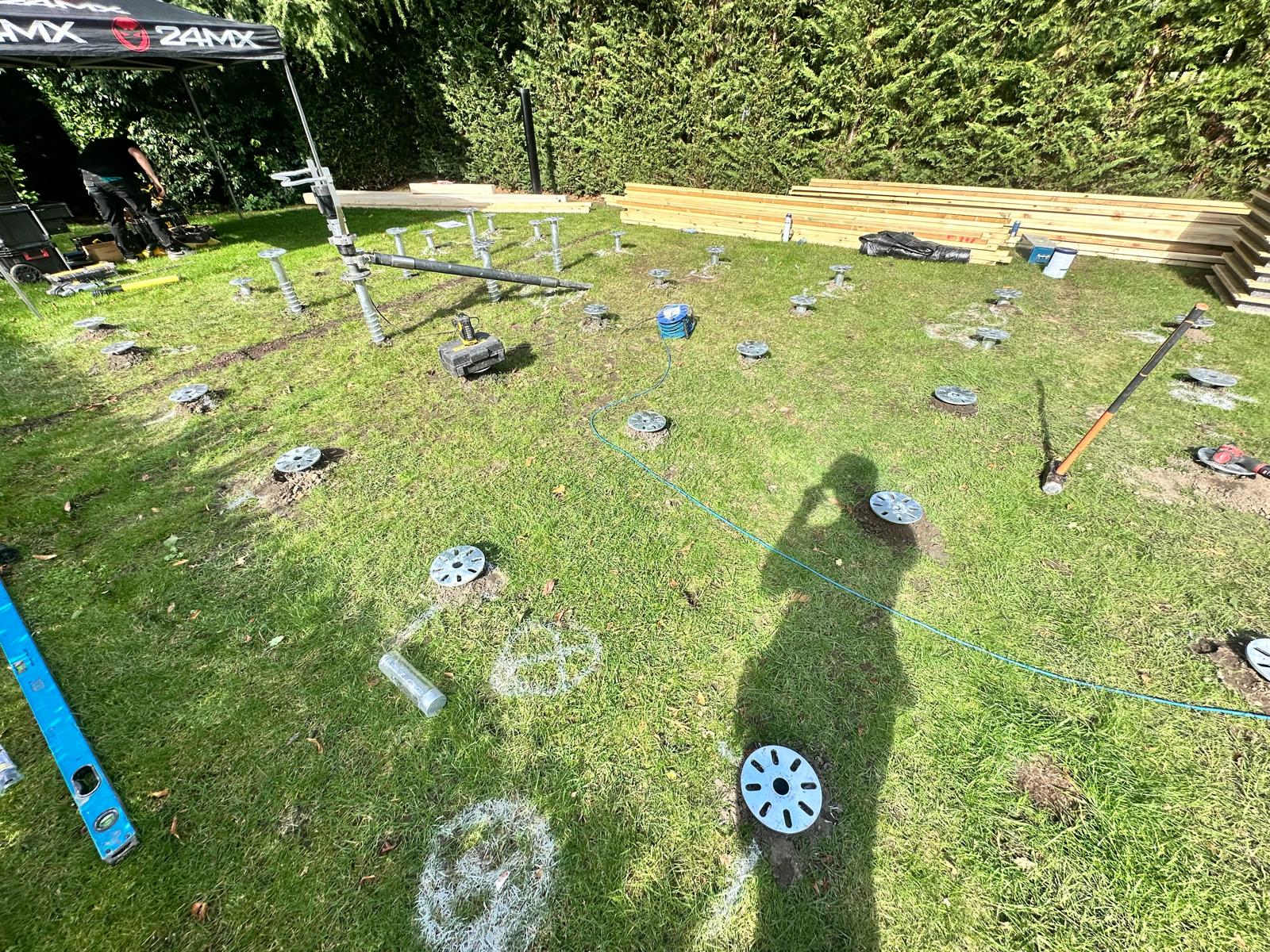
In practice, same day garden room foundations usually refer to a screw pile or ground screw system installed and completed in a single visit. The screws are driven into the ground using specialist machinery, set to the required depth and load requirement, then cut or adjusted to the correct height so the finished foundation is level and square.
There is no trench digging, no spoil to remove, no shuttering and no waiting for concrete to cure. Once installed, the foundation can typically be built on straight away. That changes the pace of a project. Instead of booking groundwork, then waiting, then returning when the slab or pads are ready, the next stage can often start immediately.
That does not mean every site is identical. Soil conditions, access, tree roots, gradients and load requirements still need to be assessed. Same day is realistic because the method is efficient, not because the engineering is skipped.
Why ground screws suit garden rooms so well
Garden rooms are a good fit for screw foundations because they usually need precision more than mass excavation. Most are lightweight to medium-weight structures with clear load paths and defined positions for support points. That makes them ideal for a properly designed screw pile layout.
The big advantage is control. Ground screws can be installed to exact locations and heights, which helps when the building system above needs a reliable datum. Timber frame garden rooms, SIPs structures, insulated studios and annex-style outbuildings all benefit from that accuracy.
Clean installation is another major factor. Many garden room sites are finished gardens, tight side access plots or occupied homes where clients do not want a mini building site for a week. A screw-based system reduces disruption considerably. No piles of muck. No concrete wagons. No wet base to protect.
For installers, that means fewer delays and fewer variables. For homeowners, it means the garden is not torn apart just to get the project started.
Same day garden room foundations vs concrete
Concrete still has its place. On some projects, it is the right answer. If the design calls for a full slab, if the structure loads are unusual, or if ground conditions dictate a different approach, then a concrete solution may make sense. Good foundation advice starts with suitability, not with forcing one method onto every job.
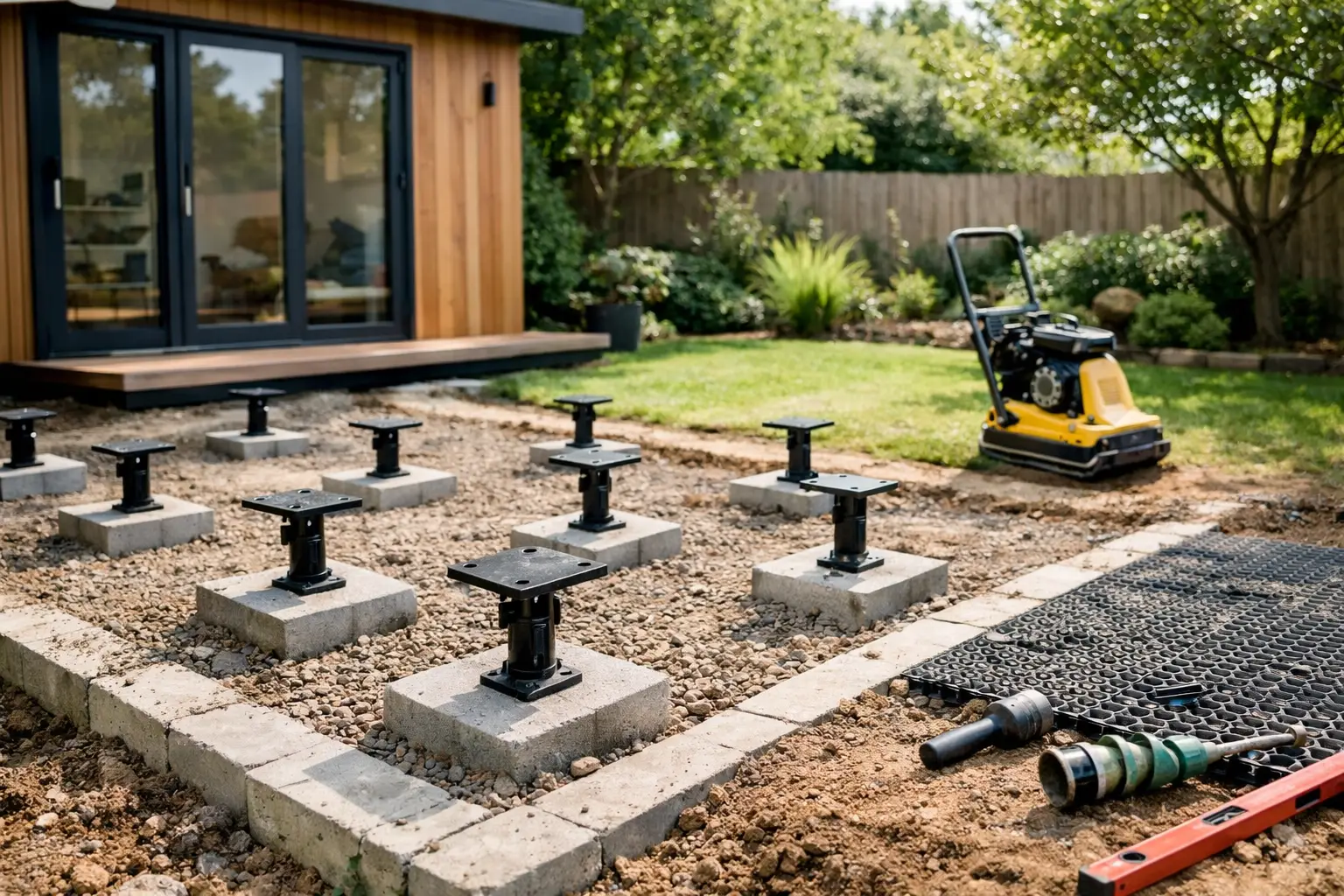
That said, for many garden rooms, concrete is slower and more disruptive than it needs to be. You are usually dealing with excavation, material delivery, labour on site, weather exposure and cure time. Even a straightforward pad system can create programme drag because one stage depends on the previous one being fully complete.
Same day garden room foundations avoid that bottleneck. The installation is fast, the site stays cleaner and the handover is immediate. You also remove the variability that comes with hand-dug depths, inconsistent pad positions or slight errors in setting out. Precision matters because small inaccuracies in the base become larger headaches when walls, bearers and floor systems go in.
Cost depends on the site and specification. Ground screws are not always the cheapest line item on paper, but they are often the more efficient option across the whole job when you factor in labour, waste removal, programme time and reduced disruption.
How the installation works on site
A proper install starts before anyone arrives with machinery. The layout, building size, anticipated loads and ground conditions need to be understood first. Screw length and diameter are not chosen at random. They are specified to suit the job.
On site, the foundation positions are marked out to the required set-out. The screws are then mechanically driven into the ground. Installation torque and ground response help confirm performance, and where needed, load testing can provide additional verification. Once each screw is in place, heights are adjusted to achieve a level, consistent base.
This is where experience matters. Fast installation is one thing. Accurate installation is another. The final foundation needs to be square, at the right centres and ready for the garden room system above. If the installer understands garden room builds specifically, they are far more likely to deliver a result that works cleanly with the next trade.
In many cases, the entire process is completed in hours rather than days. That is the difference. The project can move straight on instead of standing still.
When same day garden room foundations make the most sense
They are especially useful where access is awkward, timelines are tight or the existing garden needs to be protected. Rear gardens with narrow side passages are a common example. Getting wet concrete, excavation kit and waste out of those sites is rarely efficient. Ground screws are far easier to manage.
They also make sense on projects where scheduling matters. Garden room companies often work to tight installation calendars. If the base is late, the build crew is delayed. If the base is inaccurate, the day becomes a snagging exercise. A specialist foundation contractor removes a lot of that risk.
For homeowners, the attraction is usually practical rather than technical. They want the job started and finished with minimal fuss. They do not want to lose a week to groundwork if a cleaner option can achieve the same structural outcome.
There are limits, of course. Very poor access, buried obstructions, highly unusual soil conditions or heavily engineered structures may require a different foundation strategy. The right answer depends on the site. A competent contractor will say so clearly.
What to check before choosing a contractor
Not all screw foundation services are equal. The method is fast, but it still needs proper set-out, correct screw selection and reliable installation equipment. If those parts are weak, the speed becomes irrelevant.
Start with experience in garden rooms specifically. A contractor who regularly installs for this sector will understand bearer layouts, typical load patterns and the need for a build-ready finish. Ask how the screw specification is chosen. Ask what happens if ground conditions differ from expectation on the day. Ask how levels and positions are checked.
It is also worth asking whether load testing is available, especially on larger or more technical projects. That level of technical backing matters when builders and clients need confidence in what is going into the ground.
The best contractors keep things straightforward. Clear quoting. Clear scope. Clear responsibility. That is one reason specialist firms such as Ground Down stand out - the service is built around this exact category, not treated as a sideline.
The bigger benefit is certainty
Speed is the headline, but certainty is the real gain. Same day garden room foundations reduce the number of moving parts in a project. They cut out excavation, spoil, curing time and much of the mess that clients dislike. More importantly, they give the build team a foundation they can work from straight away.
That matters on every level. It protects programme dates. It keeps sites tidier. It reduces the chances of errors being carried into the structure above. And it gives homeowners a cleaner, more predictable start to the job.
If you are comparing foundation options for a garden room, do not just ask what is quickest. Ask what gets the build moving without creating problems later. A foundation should do one job very well - be accurate, dependable and ready when the rest of the project needs it.