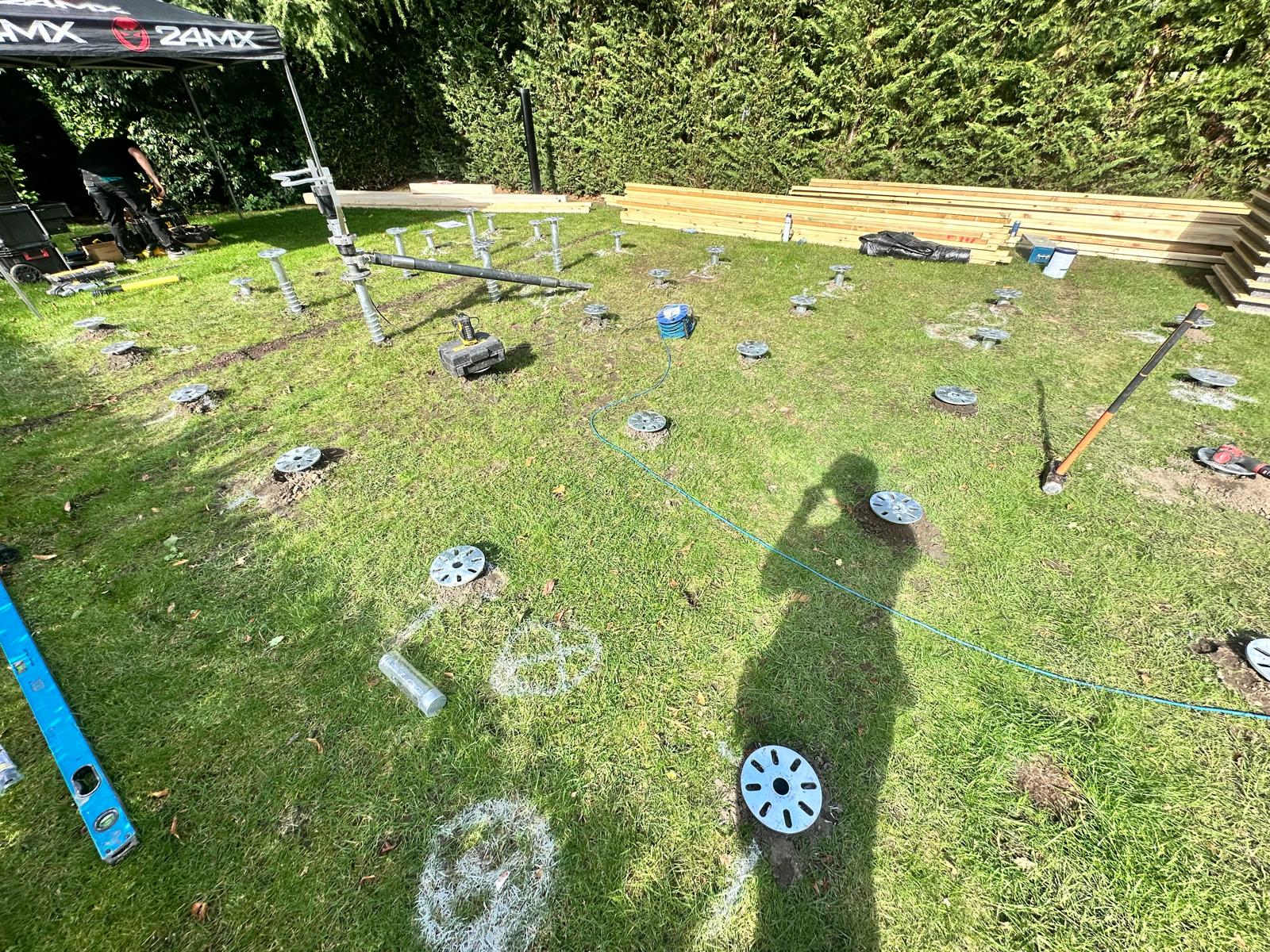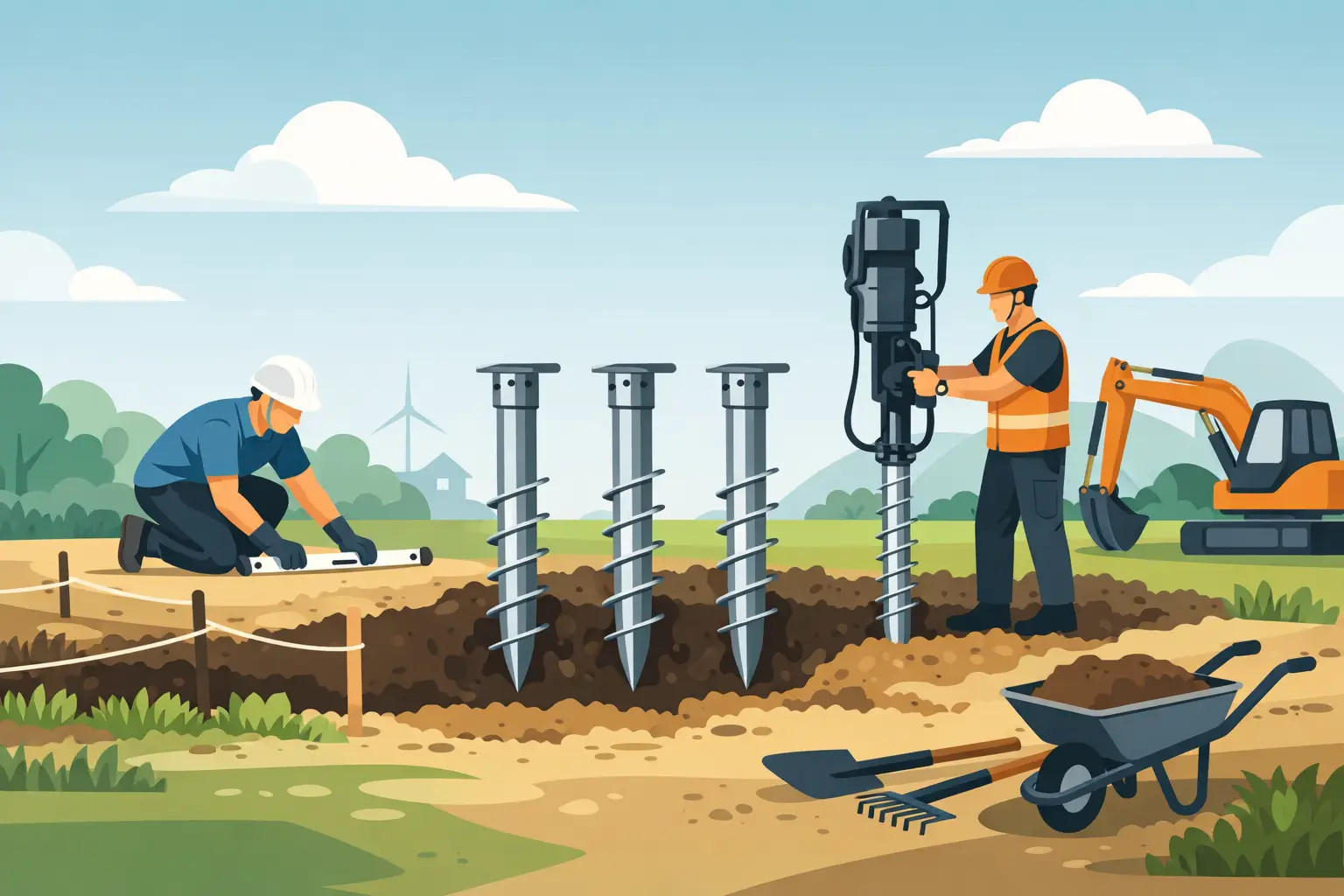
If you want a ground screw foundation installed quickly and accurately, the prep work matters. Knowing how to prepare site for ground screws saves time on the day, reduces avoidable delays and helps the installer deliver a level, build-ready base without guesswork.
Ground screws remove most of the mess and downtime that come with concrete, but they do not remove the need for a proper site check. The good news is that site preparation is usually straightforward. It is less about heavy groundwork and more about access, clearance, accurate setting out and making sure there are no surprises below ground.
How to prepare site for ground screws before installation
The first thing to get right is access. Ground screws are installed with specialist machinery, and even compact equipment still needs a clear route to the work area. That means checking gate widths, side access, steps, tight corners and any soft or uneven ground that might affect safe movement of machinery.
For many garden room sites, access is the deciding factor between an easy install and a more complicated one. A narrow side return or steep garden does not always rule ground screws out, but it may affect the equipment choice and installation method. This is why clear photos, measurements and a basic description of the route into the garden are useful from the start.
Next comes clearance. The installation area should be free from stored materials, garden furniture, planters, waste, children's play equipment and anything else that gets in the way of setting out or machinery movement. Overhanging branches can also be a problem, especially where head height is limited. You do not need a stripped-back building site, but the team does need enough room to work safely and accurately.
It also helps to cut back long grass and remove loose surface debris. Ground screws can go through many typical garden surfaces, but a clean working area makes line marking, level checks and final positioning much more precise.
Levels, setting out and the build footprint
One of the most common mistakes is assuming the installer can work from a rough idea of where the building will go. Ground screws need a clear footprint. That means the size, orientation and exact position of the structure should be confirmed before installation day.
If you are a garden room builder, this usually means supplying the finished external dimensions and the required bearer or chassis layout. If you are a homeowner, it means being certain where the structure is going, how it sits within boundaries and whether doors, overhangs or steps affect the foundation position.
A few centimetres out at foundation stage can create bigger problems above. Cladding lines, wall positions and door thresholds all depend on the base being square and in the right place. Done properly, the screw layout is set out to match the build exactly, not approximately.
Levels matter too. Ground screws are an excellent option on sloping or uneven ground, but the slope needs to be understood in advance. A gentle fall is usually simple to deal with. A steep level change, retaining edge or raised platform design may need a different bracket arrangement or longer screws. Neither is a problem if it is identified early.
The practical point is this: have a clear idea of your target finished floor level. That is especially important where the building needs to align with paving, bi-fold thresholds or an existing door from the house.
Do you need to clear the whole area?
Usually, no. One of the benefits of ground screws is that there is no need to excavate the full footprint. You do not need to dig out the site as you would for a concrete slab. In many cases, grass, compacted soil or existing garden ground can stay in place.
That said, localised obstructions should be removed. Tree stumps, large roots near screw positions, buried rubble, old footings and heavily compacted demolition waste can all affect installation. Some can be worked around. Some cannot. If there is any history of old structures on the site, mention it early.
Underground services are the big one
If there is one part of how to prepare site for ground screws that should never be guessed, it is buried services. Water pipes, gas lines, electric cables, drainage runs and telecoms all need to be identified before installation.
Do not assume that because a site looks simple, it is clear below ground. Rear gardens often contain unexpected services, especially where sheds, home offices, outside taps, lighting, hot tubs or previous extensions have been added over time.
If you know where services run, mark them clearly. If you do not know, this needs checking before installation. On some projects that is straightforward. On others, it may require plans, a service trace or exploratory checks. It depends on the site history and the level of risk.
This is also where accurate communication matters. If a cable was installed by a landscaper years ago and only roughly remembered, say so. Partial information is still better than silence. Good installers would rather assess a possible issue than discover it when the machine is on site.
Ground conditions and soil type
Ground screws work in a wide range of soil conditions, but screw specification depends on what is actually in the ground. Clay, chalk, mixed ground, made ground and softer soils all behave differently. The right diameter, shaft length and bracket setup come from understanding the load above and the conditions below.
You do not need to become a geotechnical expert before booking an install, but it helps to share what you know. If the garden is routinely waterlogged in winter, if the area is heavy clay, or if there is a history of filled ground from previous works, say so. The more accurate the picture, the more accurate the foundation design.
Some sites also benefit from load testing, particularly where structural loads are higher or soil behaviour is less predictable. That is not necessary on every project, but it is part of doing the job properly where extra confirmation is needed.
What about trees and roots?
Trees nearby do not automatically stop a ground screw installation. In fact, ground screws are often a more sensible option than widespread excavation around root zones. But roots still need to be considered, both for practical installation and long-term ground movement.
Large structural roots can obstruct screw positions. Tree influence can also affect moisture levels in shrinkable clay soils. Again, this is not a reason to avoid the system. It is a reason to assess the site properly and choose the right approach.
What clients should have ready on the day
By installation day, the site should be accessible, the footprint agreed, and any known service routes identified. That is the minimum. It also helps if there is a clear contact on site who can confirm positioning and answer any final questions.
For trade customers, provide the structural layout that the screws need to support. Bearer centres, chassis points or load-bearing lines should not be left open to interpretation. For private customers, the installer may work from agreed drawings or a confirmed design supplied in advance.
If pets, vehicles or other site activity could interrupt access, sort that before the team arrives. Small delays at the start of the day can knock the whole programme. Ground screw installations are fast, but only when the site is genuinely ready.
What not to do when preparing for ground screws
Do not pour concrete pads "just in case". Do not start digging trial holes without a clear reason. And do not mark out the building with rough measurements from a fence that may not be straight. These are common attempts to help that often create more problems than they solve.
The better approach is simple. Confirm the building layout. Clear the working area. Share accurate information about access and underground risks. Then let the foundation layout be set to the actual structure.
This is also where specialist experience makes a difference. Ground screw work for a garden room is not generic groundwork. The foundation needs to match the loads, span requirements and finished build. Fast is useful, but accuracy is what protects the job above.
For most projects, preparing the site is not difficult. It is just a matter of being organised. Get the basics right, and the result is what you want from the start - a clean install, minimal disruption and a foundation that is ready to build on the same day.
If you are planning a garden room, annex or similar outdoor structure, the best prep is honest information and a clear footprint. That gives the installer what they need to get it right first time.