If you are weighing up ground screws vs concrete base for garden room projects, the real question is not which system is more familiar. It is which one gets you a level, build-ready foundation with the least delay, disruption and risk for the structure above. For many garden room builds, that is where the difference becomes obvious very quickly.
A garden room foundation only has one job - carry loads properly and give the installer an accurate starting point. If the base is out, slow to prepare or difficult to install on site, the problems do not stay at ground level. They affect scheduling, labour, access, finish quality and handover.
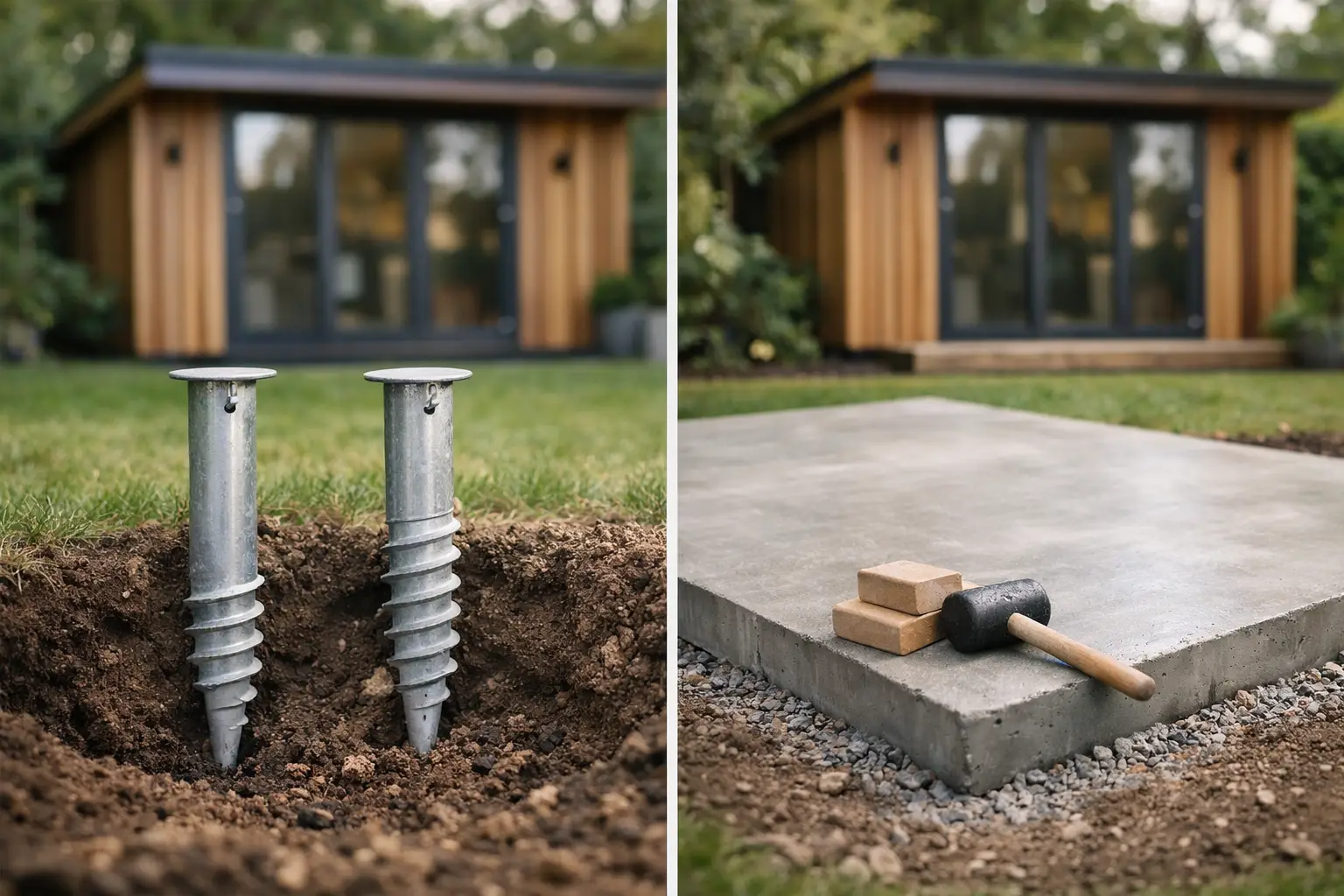
Ground screws vs concrete base for garden room builds
Concrete has been the default for years. People know what it is, builders know how to pour it, and on the right site it can do the job well. But default does not always mean best. Garden rooms are not house extensions, and many do not need a fully excavated slab to perform properly.
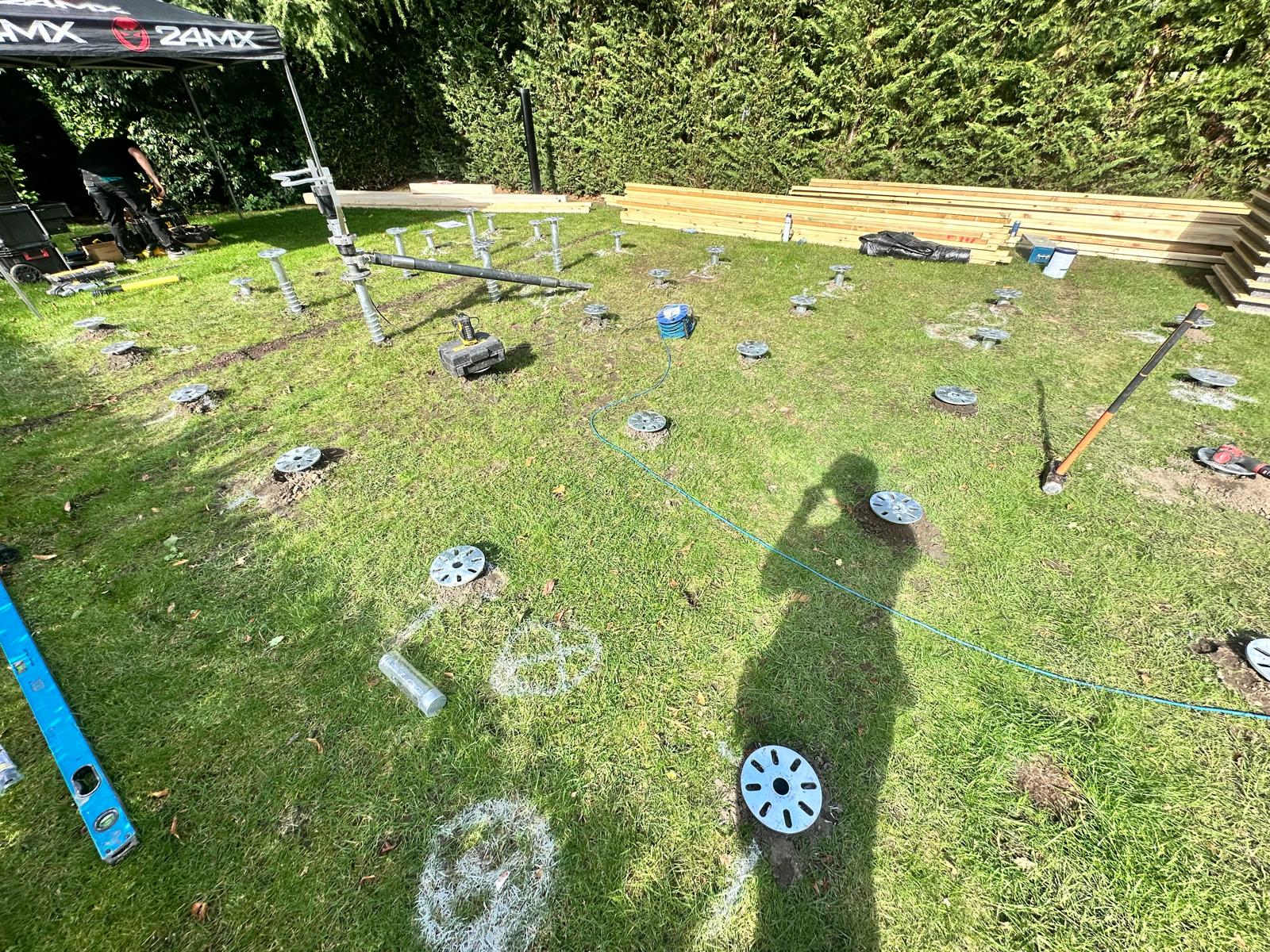
Ground screws are a specialist alternative. Steel screws are driven into the ground to a specified depth and layout, then cut or adjusted to create a level foundation for the frame above. No digging out large areas. No spoil to remove. No wet trade. No curing time.
That difference matters most on projects where speed, access and cleanliness are not nice extras but part of making the build work.
Where concrete still makes sense
There are sites where a concrete base is a reasonable option. If you have clear access for excavation, enough space for materials, no issue with site mess and no pressure on programme, a slab can be appropriate. Some customers also prefer the familiarity of a traditional method, especially if they are already coordinating groundworkers and other masonry works at the same time.
Concrete can also suit designs that genuinely require a full slab for structural or floor build-up reasons. That is not every garden room, but it does happen. The key point is that concrete should be chosen because it suits the build, not because it is the only system people know.
The trade-off is straightforward. Concrete usually brings more excavation, more spoil, more wet work and more waiting. On a tight residential site, those are not small issues.
Why ground screws are increasingly chosen
For garden room builders and homeowners, ground screws solve several practical problems at once. Installation is fast. The site stays far cleaner. The foundation is ready to build from the same day. If access is awkward, that can be the difference between a straightforward install and a difficult, drawn-out groundwork package.
This is especially relevant in South East England, where many garden room projects are in established gardens with fences, planting, finished patios and limited machine access. Digging out a slab through a neat rear garden is rarely the elegant part of the project.
With ground screws, the process is more controlled. The screw layout is set out to match the structure. Screws are installed to the required depth and load criteria. The finished positions can then provide a precise bearing line for the frame. Done properly, it is a clean, accurate way to start a build.
Speed and programme
This is usually the first big separator.
A concrete base is not just the pour. It is excavation, disposal, formwork, sub-base preparation, reinforcement if needed, the concrete delivery itself and then curing time before the structure can be loaded. Even when everything runs smoothly, that is multiple stages with more chance for delay.
Ground screws compress that timeline. Installation is typically completed in hours, not days, and the base is ready immediately. There is no waiting for material to cure and no risk of the next trade standing around because the slab is not ready.
For garden room companies working to fixed installation slots, that matters. For property owners who want the garden back quickly, it matters too.
Accuracy and what it means for the build above
A garden room needs a foundation that is level, square and consistent. If the base is wrong, the correction work starts higher up the structure, where it is more expensive and more visible.
Concrete can achieve good results, but accuracy depends heavily on site preparation, shuttering, levels and finishing quality. A poor slab is not easy to fix once it is down.
Ground screws are not immune from bad installation either. They need correct setting out, suitable screw specification and competent machinery use. But in specialist hands they offer a very controlled route to a precise base. That is one reason professional garden room installers increasingly favour them over general groundwork methods.
Mess, access and disruption
This is where many customers change their mind.
Concrete work is disruptive by nature. You excavate. You move spoil. You bring in aggregate and concrete. You create washout, mud and site traffic. If access is through the house or along a finished garden path, the impact increases.
Ground screws keep the footprint of the install far smaller. There is no broad dig-out and very little disturbance compared with a slab. That makes them well suited to rear gardens, restricted access plots and sites where clients want to avoid turning the whole space into a groundwork zone.
If your build is next to existing landscaping, mature planting or hard finishes you want to keep intact, that cleaner approach becomes a serious advantage.
Ground conditions and suitability
This is the part where blanket claims are unhelpful. Neither system is automatically right on every site.
Concrete is often assumed to work everywhere, but ground conditions still matter. Poor bearing ground, tree influence, drainage issues and uneven levels can all complicate slab design and preparation.
Ground screws also depend on the site. Soil type, obstructions, made ground, buried debris and load requirements all affect specification and installation approach. That is why project-specific advice matters. Screw diameter, length and layout should be selected for the actual structure and the actual ground, not guessed from a standard detail.
A proper assessment removes most of the uncertainty. In some cases load testing may also be the sensible route, particularly where confirmation of performance is needed.
Cost - what are you really comparing?
People often ask whether ground screws are cheaper than concrete. Sometimes yes, sometimes no. The better question is what total job cost and project impact look like once you include everything.
If you compare only raw material prices, concrete can appear familiar and straightforward. But that is rarely the full picture. Excavation, waste removal, access issues, labour time, curing delays and making good to the garden all have a cost.
Ground screws can offer better value because they reduce those associated items. They can also protect the programme, which has its own commercial benefit for builders. That said, every site is different. A simple open site may narrow the gap. A restricted rear garden usually widens it.
The right comparison is not line against line on two materials. It is total installed foundation package, total time on site and total disruption.
Durability and confidence
Both systems can be durable when designed and installed correctly. The real issue is not whether steel or concrete exists for a long time. It is whether the foundation has been specified properly for the structure, soil and load path.
Good ground screw installations rely on the right corrosion protection, correct embedment, proper bracketry and accurate load planning. Good concrete installations rely on suitable design, correct thickness, sound sub-base and competent finishing. Poor work in either system stores up problems.
That is why specialisation matters. A contractor focused on garden room foundations will usually spot details that a generalist can miss, from access planning to final connection points for the frame.
Which option is better for a garden room?
For most garden room projects, ground screws are the more practical choice. They are faster, cleaner and ready to build on immediately. They reduce excavation and disruption. They also suit the way many garden rooms are actually installed - as precise, scheduled structures that benefit from a foundation system built around speed and accuracy.
Concrete still has its place. If the design genuinely needs a slab, or the site conditions and build sequence point that way, it can be the right answer. But many projects use concrete simply because that is what has always been done. That is not the same as choosing the best system.
A specialist installer will look at access, ground conditions, loads and the structure itself before recommending a route. That is the sensible way to decide. At Ground Down, that practical approach is the point - no guesswork, no unnecessary groundwork, just the right foundation for the build.
The best base is the one that lets the garden room go in accurately, on time and without turning the rest of the project into an avoidable mess.