If your build programme depends on a foundation being ready today, not next week, ground screw installation changes the job straight away. No digging out. No wagons of concrete. No waiting for cure time while the rest of the project stands still. For garden rooms, annexes and similar outdoor structures, it is a faster route to a build-ready base - provided it is specified and installed properly.
That last part matters. Ground screws are not a shortcut for poor planning. They are a precise foundation system. When the layout is right, the screw size is matched to the loads and ground conditions, and installation is carried out with the correct machinery, the result is clean, level and ready for the structure above within hours.
What ground screw installation actually involves
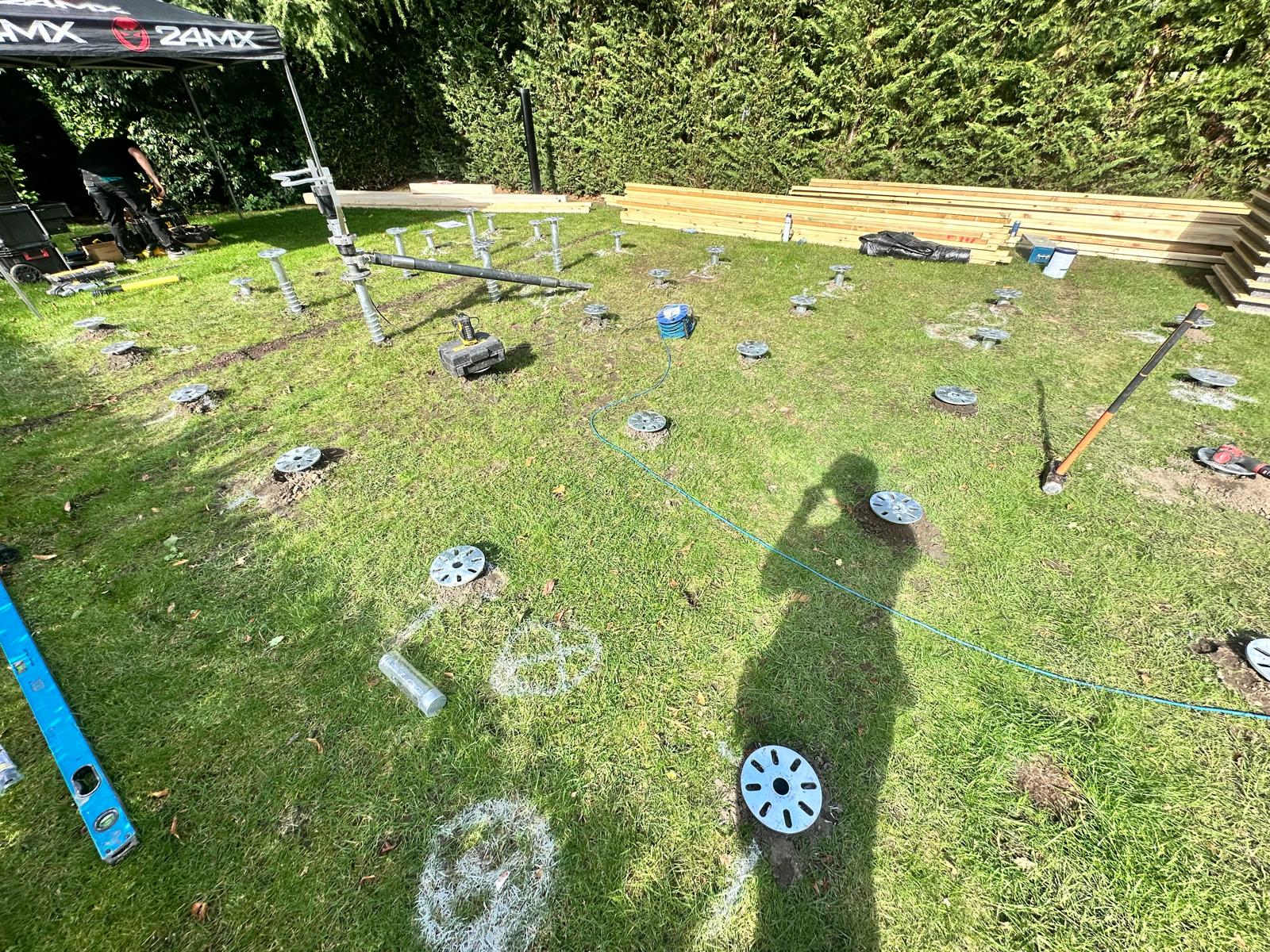
At a glance, the process looks simple. Steel screws are driven into the ground at set positions to form the foundation points for the structure. In practice, there is more to it than that. The installer needs to understand the footprint, load paths, required finished levels, access constraints and the likely behaviour of the soil on site.
A proper installation starts with the scheme, not the machine. The footprint is set out accurately so each point lands where it should. The correct screw type and length are selected based on the application and ground conditions. Torque during installation gives a useful indication of how the screw is performing in the ground, but it is only one part of the picture. For some projects, load testing is the right call to confirm performance and remove guesswork.
Once the screws are driven to the required depth and resistance, the heads or brackets are adjusted to the specified level. That is what turns a set of steel piles into a usable foundation. A garden room installer does not need a pile in roughly the right place. They need a base that is square, consistent and ready to take the frame.
Why ground screw installation is replacing concrete on many jobs
The appeal is not hard to see. Traditional concrete bases can be slow, messy and weather-sensitive. You excavate, remove spoil, pour concrete, then wait. If access is poor, every stage gets harder. If the weather turns, the programme slips.
Ground screw installation strips out much of that friction. There is minimal disruption to the site, no wet trades, and no curing period holding up the next team. On the right project, the structure can start going up the same day.
That speed does not just help contractors. It helps property owners too. Less excavation means less mess in the garden. Less plant movement means less disturbance to the surrounding area. If the build sits near existing landscaping, fencing or established lawns, that cleaner process can make a real difference.
There is also a practical accuracy benefit. With specialist equipment and proper set-out, installers can achieve foundation points exactly where the build requires them. That matters for prefabricated garden rooms and annex structures where tolerances are not generous.
Where it works best - and where it depends
Ground screws are an excellent fit for garden rooms, offices, annexes, studios, modular buildings and similar lightweight to medium-weight structures. They also suit sloping sites, awkward access and plots where avoiding excavation is a major advantage.
That said, not every site is straightforward. Ground conditions vary. Made ground, heavy rubble, dense roots, buried obstructions and unusual load requirements all affect the specification and approach. This is why a specialist foundation contractor adds value early. The right answer is not always the same screw on every job.
Soft ground may require longer screws or a different configuration. Restricted access may affect the machinery that can be used. Larger structures with higher loads may need closer centres, larger diameters or confirmation through testing. The principle is simple, but the detail still matters.
For informed clients and trade buyers, this is the key point: ground screws are not a one-size-fits-all product. Good results come from matching the system to the project, not forcing the project to suit a standard part.
The key stages of ground screw installation
1. Assessing the project properly
Before anything goes into the ground, the installer needs to know what the structure is, how it will be supported and what conditions exist on site. Dimensions, intended use, load assumptions and access all feed into the specification. A small garden office and a larger annexe with heavier floor loads are not the same job.
This is also the stage where site-specific risks are considered. Trees, slopes, services and neighbouring features all need to be understood early, not once the machine is already on site.
2. Setting out the foundation points
Accuracy starts here. The grid or support line must reflect the structure above, including beams, bearers and point loads. Poor set-out creates problems that no amount of adjustment later can fully hide.
For garden room builders, this is one of the biggest reasons to use a specialist installer. A base that is level but incorrectly positioned is still wrong.
3. Installing the screws with the right machinery
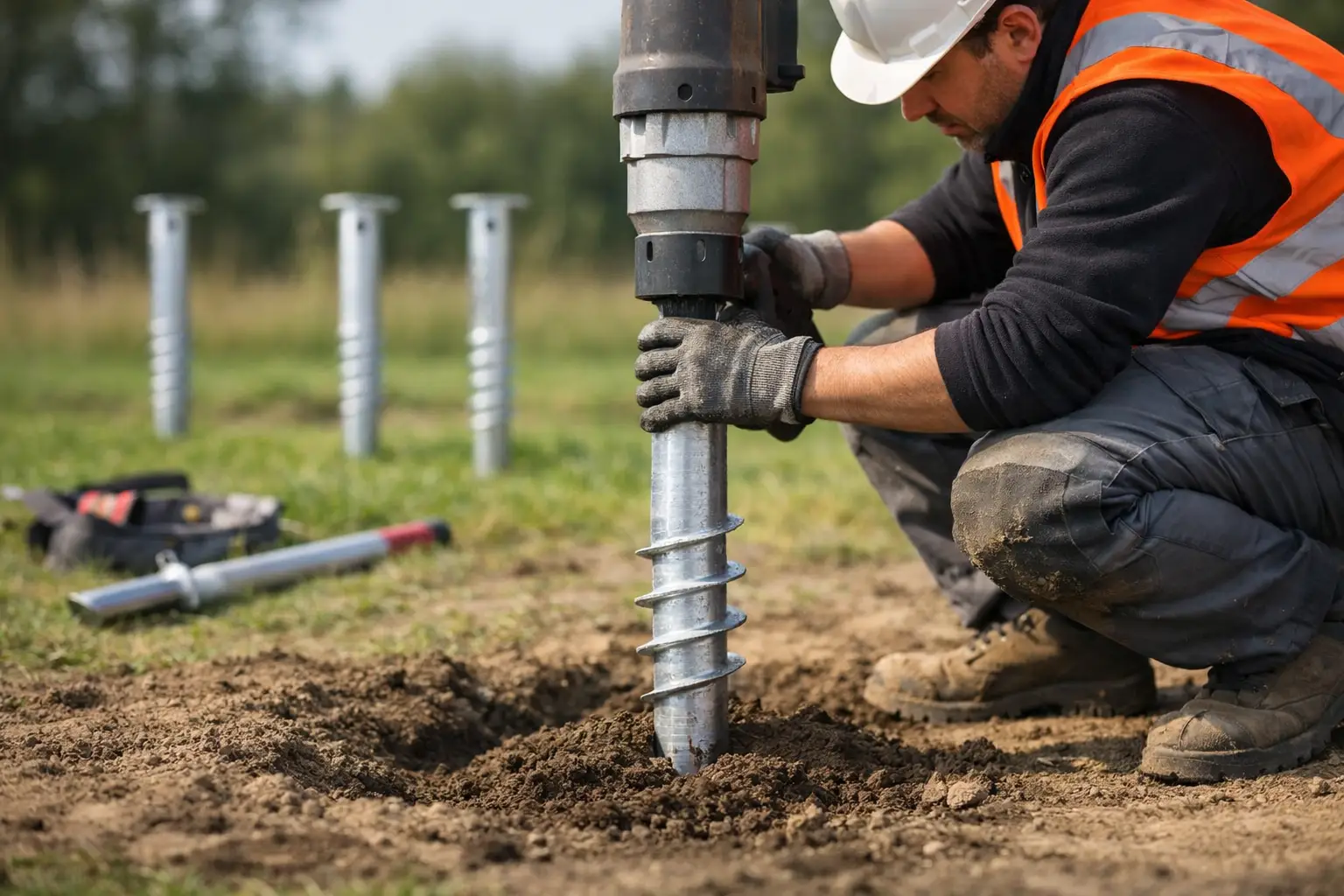
The screws are mechanically driven into the ground to the required depth and resistance. The installation equipment needs to suit both the screw specification and the access available on site. Small domestic gardens often need compact, capable machinery rather than oversized kit.
During installation, the operator monitors performance and consistency. If the ground behaves differently from expectations, the response should be controlled and technical, not improvised.
4. Levelling and making the base build-ready
Once installed, the top connection is adjusted to the required height. This is the stage that determines whether the structure above can be fitted quickly and accurately. Levels need to be right. Alignment needs to be right. Build-ready means the next trade can get on with the job without remedial work.
Common mistakes in ground screw installation
The most common failure is treating the foundation as an afterthought. If the screw layout is based on guesswork, or the load paths are not understood, the speed advantage disappears the moment the superstructure arrives.
Another issue is choosing screw sizes on price alone. A cheaper screw is not cheaper if it is the wrong length, unsuitable for the soil or cannot achieve the required performance. The same applies to supply-only purchases without proper technical input. Supply-only has its place, especially for experienced trade customers and competent self-installers, but it still needs correct specification.
There is also the access trap. Some sites look simple until machinery has to get through side passages, around outbuildings or across delicate landscaping. A contractor used to these conditions will ask the awkward questions before the installation day, not during it.
What a good installer should be able to tell you
A competent contractor should be clear on screw type, likely installation method, expected site requirements and how the finished foundation will interface with the structure above. If they cannot explain how they arrived at the specification, that is a warning sign.
They should also be realistic. Not every site is identical. Not every quote can be based on a photograph and a postcode. Experience helps, but so does a willingness to say when testing, additional information or a closer site review is needed.
For many builds in South East England, that specialist approach is what keeps programmes tight and avoids costly corrections later. Ground Down works in exactly that space - focused on garden room foundations, accurate installation and same-day build readiness rather than generic groundwork.
Ground screw installation for trade and private clients
Trade buyers usually care about one thing first: can the base be relied on, and can the programme move immediately after installation? Private clients often start from a different place. They want to know whether the garden will be dug up, whether the job will drag on, and whether the structure will sit correctly once installed.
Ground screw installation answers both sets of concerns when it is handled well. Trades get speed, precision and predictable handover. Property owners get a cleaner process and less disruption. Both get a foundation system that avoids the delays tied to excavation and curing.
The strongest projects are the ones where the foundation is treated as part of the build system, not a separate problem to solve cheaply at the last minute. That is where screws outperform the old concrete-first mindset.
If you are planning a garden room, annexe or modular structure, the useful question is not whether ground screws are fashionable. It is whether a fast, accurate, no-excavation foundation would remove risk from your build. On many sites, the answer is yes - and the difference is obvious the moment the installers leave and the build can start.