A garden room quote can look sensible until the groundwork line appears. That is usually where budgets start drifting. Garden room foundation cost is not just about materials under the building. It is about access, soil, speed, accuracy and whether the base is genuinely ready for the structure above.
If you are comparing options, the cheapest number on paper is not always the lowest project cost. Concrete can seem familiar, but excavation, spoil removal, wet trades, curing time and weather delays all add cost somewhere. A screw pile foundation often shifts that equation because it removes a lot of moving parts.
What affects garden room foundation cost?
The first driver is size. A small garden office needs fewer foundation points than a large insulated room, annexe or multi-use garden building. More load usually means more screws, a different specification, or a tighter layout to support the frame correctly.
Ground conditions matter just as much. Soft ground, made-up ground, sloping plots and restricted access can all affect installation time and screw design. Good foundation work starts with the right specification, not guesswork. If the wrong size screw goes in, the build above pays for it later.
The structure itself also changes the price. A lightweight room and a heavier insulated building do not ask the same thing of the ground. Timber frame, steel frame, glazing levels and roof loads all feed into the foundation design. A proper quote should reflect that.
Then there is access. If a team can get straight onto site with the right machinery, installation is simpler. If materials need carrying through a house, down steps, around retaining walls or into a tight rear garden, labour and programme pressure increase.
Finally, there is the foundation type. This is where costs can vary sharply because you are not comparing like for like.
Garden room foundation cost by foundation type
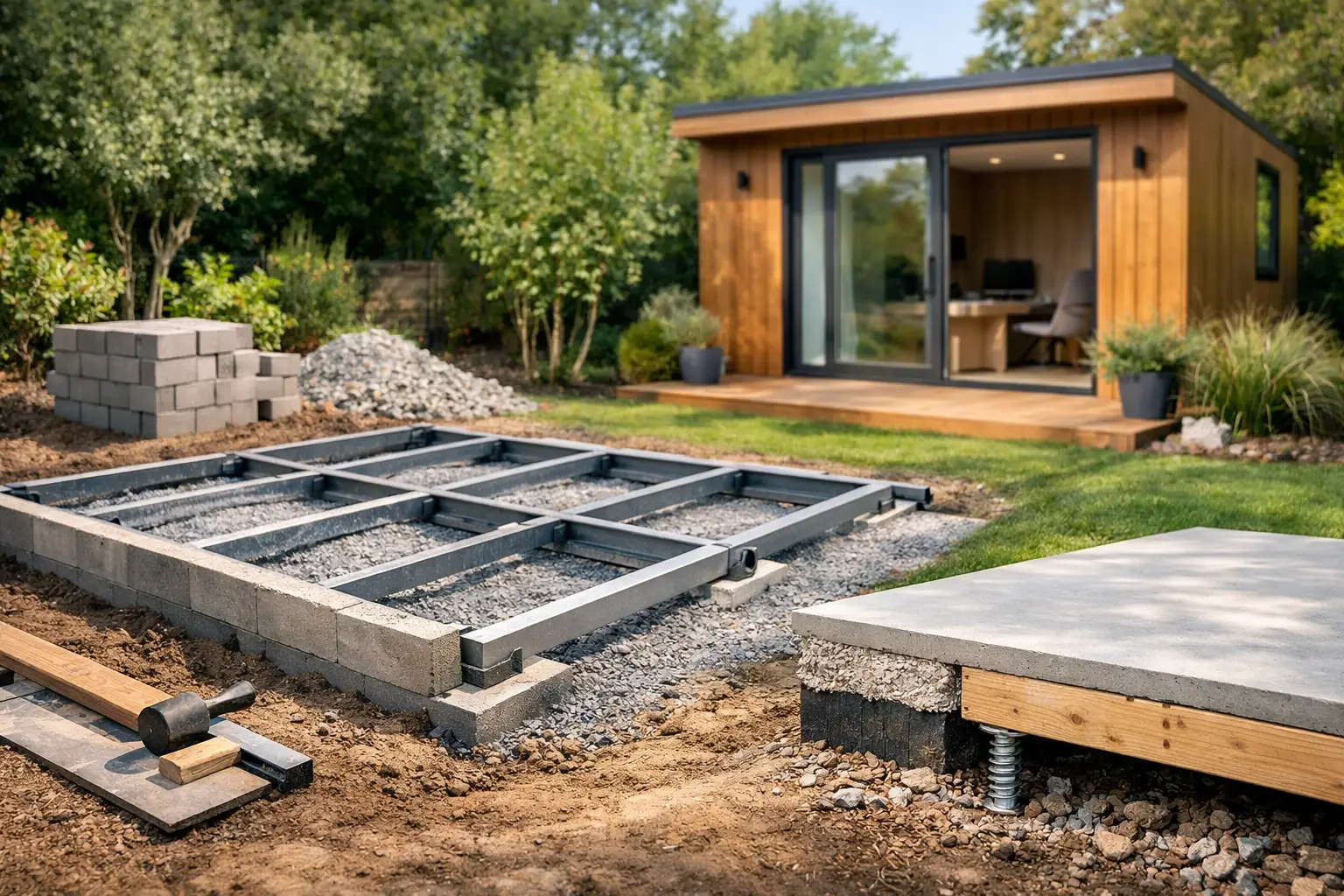
Concrete slab foundations are still common, but they come with the full groundwork package. That usually means setting out, digging, removing spoil, bringing in sub-base, shuttering, pouring and waiting for cure time. On some sites that process is fine. On others, it is slow, messy and expensive before the garden room build has even started.
Concrete pads reduce the amount of concrete, but they still rely on excavation and careful setting out. If levels are inconsistent, the frame installer ends up correcting problems that should have been dealt with at foundation stage.
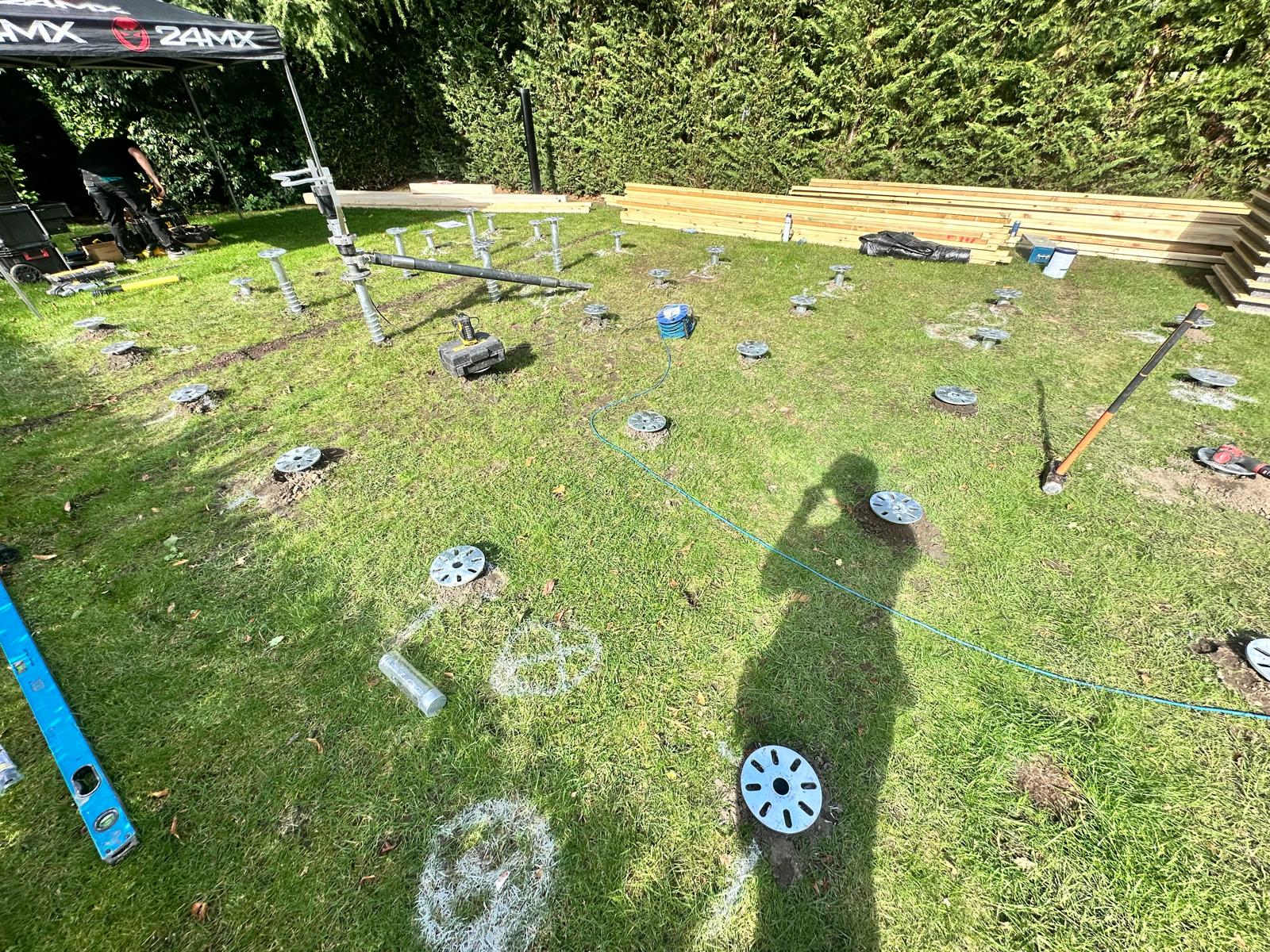
Ground screws are different. They are mechanically installed, load-bearing steel foundations driven into the ground without excavation or wet concrete. The appeal is not just speed. It is precision. A correctly installed screw pile system can be level, square and ready to build on the same day.
That changes the true cost picture. You are not simply paying for a foundation product. You are reducing excavation, spoil removal, site disruption and waiting time. For builders and garden room companies, that means tighter scheduling. For homeowners, it means less mess and fewer days of a half-finished site.
Typical price ranges and why they vary
There is no single fixed answer to garden room foundation cost because every site has its own variables. As a broad guide, small straightforward bases can sit at the lower end of the range, while larger buildings, awkward access and more demanding ground conditions push costs up.
Traditional concrete foundations for a garden room may look competitive at first, especially if someone prices only the pour. The issue is that the real job rarely stops there. Excavation plant, muck away, labour, sub-base, formwork and follow-on delays often sit outside the headline figure or grow once work starts.
Ground screw systems are usually quoted as a complete installed foundation solution based on the number of screw piles required, their size and the installation conditions. That often gives a cleaner, more transparent figure upfront. You know what is being installed and when the base will be ready.
For many projects, the comparison should be made on total installed cost and total build impact, not on one material line. A base that is ready in hours can save money elsewhere in the programme.
Why cheap foundations often cost more
Foundations are one of the easiest parts of a garden room project to underestimate because they disappear once the structure is built. That can tempt some clients to shop on price alone. It is usually a false economy.
If levels are out, if the footprint is not square, or if the foundation method is not suited to the site, the knock-on costs travel upwards. Installers lose time. Frames need packing or adjustment. Doors and glazing can end up out of tolerance. In the worst cases, the whole build carries unnecessary risk because the base was never right.
That is why specialist installation matters. Accurate setting out, correct screw specification and proper load consideration are not add-ons. They are the job.
Where ground screws can reduce overall project cost
Ground screws are not always the answer for every site, but they solve a lot of the problems that make foundations expensive in the first place.
There is no excavation. That removes a major source of labour, mess and spoil handling. There is no concrete. That removes curing delays, wet weather complications and the need to coordinate pours. Installation is fast, which helps keep builders on programme and avoids dead time between groundwork and superstructure.
There is also far less disruption to the site. For domestic customers, that means less damage to lawns and less upheaval around the property. For trade customers, it means a cleaner handover into the build phase.
On many garden room projects in the South East, speed and certainty are worth real money. A same-day, build-ready foundation can protect the rest of the schedule.
What should be included in a proper foundation quote?
A useful quote should tell you more than a final number. It should explain what system is being used, how many foundation points are required, the screw or pile specification, and whether installation is based on known site conditions or an assumption.
It should also be clear about access, setting out, plant, labour and whether the base will be delivered ready for immediate construction. If a quote is vague on these points, there is a good chance costs will move later.
For more technical projects, load testing may also be relevant. That gives additional confidence that the specified solution matches the site conditions and the structure above. On specialist installations, that level of technical control is part of doing the job properly.
When concrete still has a place
Concrete is not wrong by default. For some sites and some building types, it may still be suitable. If there is excellent access, simple ground conditions and no programme pressure, a traditional base may do the job perfectly well.
But many garden room projects do have programme pressure. They do have awkward access. They do need clean installation and accurate levels without the delay of waiting for a slab to cure. That is where a modern screw pile approach can make more sense both practically and financially.
The point is to choose the foundation method that fits the build, not the one people default to because it is familiar.
How to assess garden room foundation cost properly
Start with the finished objective. You need a level, square, load-bearing base that suits the structure and lets the build start on time. Then work backwards.
Ask what preparation is actually involved. Ask what happens in poor weather. Ask whether spoil leaves site. Ask how access affects the method. Ask how long it will be before the frame can be installed. Those questions usually reveal the real cost very quickly.
If you are a garden room company or installer, there is another angle. A foundation partner who understands this category specifically can save you more than the direct installation fee. Better scheduling, cleaner handovers and fewer call-backs have value.
That is why specialist providers such as Ground Down focus on garden rooms rather than treating them as a side line to general groundwork. Precision matters more when the next trade wants to start building straight away.
The right foundation cost is not the lowest figure you can find. It is the one that delivers a base you can trust, on the day you need it, without creating extra problems around it. That is usually where the best value sits.