A sloping garden exposes every weakness in a foundation plan. What looks manageable on paper can turn into extra digging, spoil removal, stepped concrete and awkward setting-out once work starts. If you need a foundation solution for sloping gardens, the real question is not just how to support the structure. It is how to do it accurately, quickly and without creating avoidable site problems.
For garden rooms, annexes and outdoor buildings, the foundation has to do three things well. It must carry the load, deal with level changes and leave you with a square, build-ready platform. On sloping ground, that is where traditional methods often become slow and messy.
Why sloping gardens cause foundation problems
A slope changes the job from basic groundworks into a more technical install. The higher side and lower side of the site are doing different things. Depths vary. Access can be tighter. Soil conditions may change across a short distance. Even a modest fall can affect how the base is planned and installed.
Concrete bases and pads can still work on sloping sites, but they usually ask more of the project. More excavation. More material movement. More wet trade work. More time spent getting levels right before the structure can even begin. If the garden has restricted access, the practical side gets harder again.
That matters to both trade installers and homeowners. A foundation delay does not stay at foundation stage. It pushes the whole programme back. Garden room teams lose build days. Customers live with longer disruption. Wet ground and spoil heaps stay on site longer than anyone wants.
The best foundation solution for sloping gardens often is not concrete
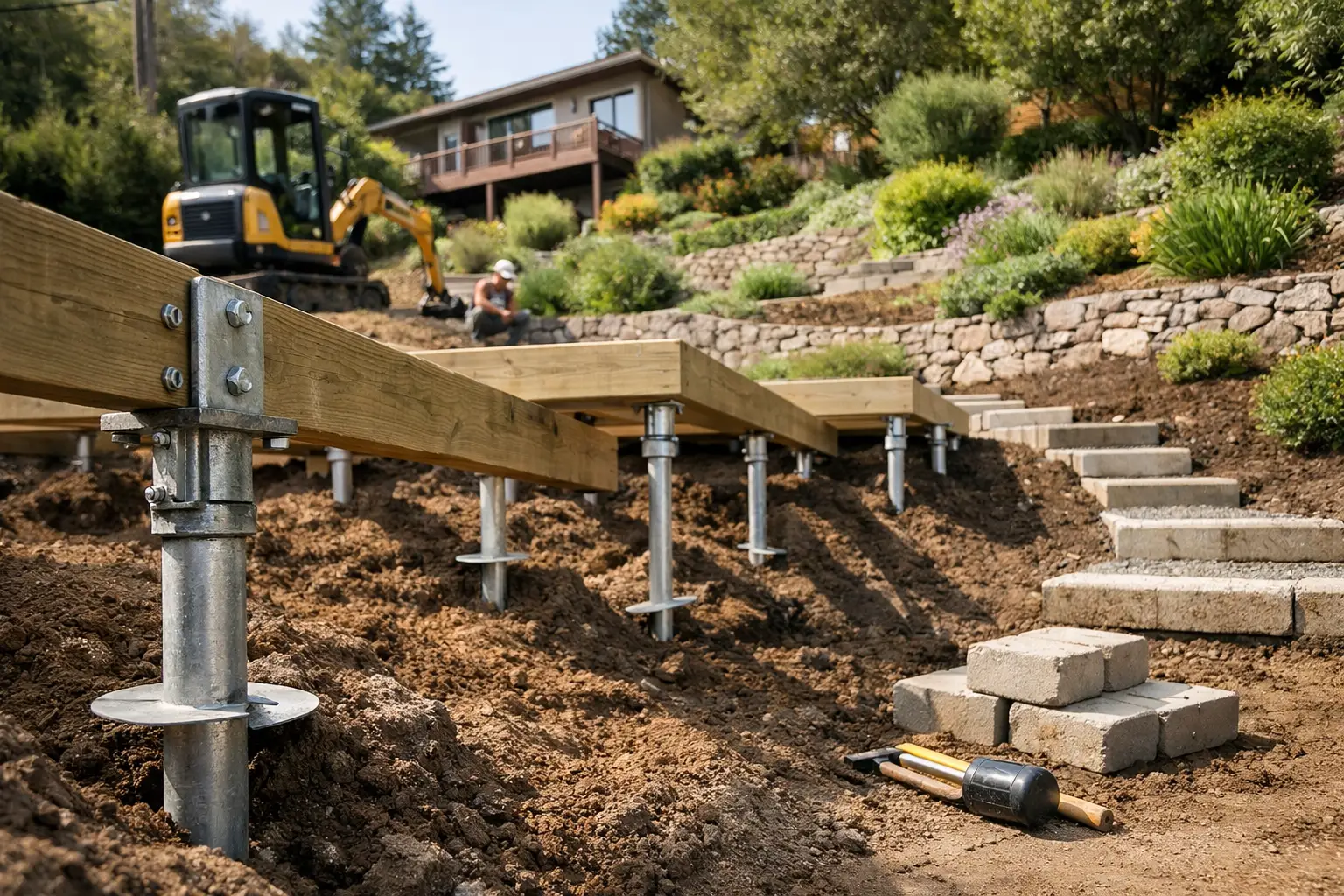
On a slope, the cleanest answer is often a system that works with the level change rather than fighting it. That is why ground screws are such a strong foundation solution for sloping gardens.
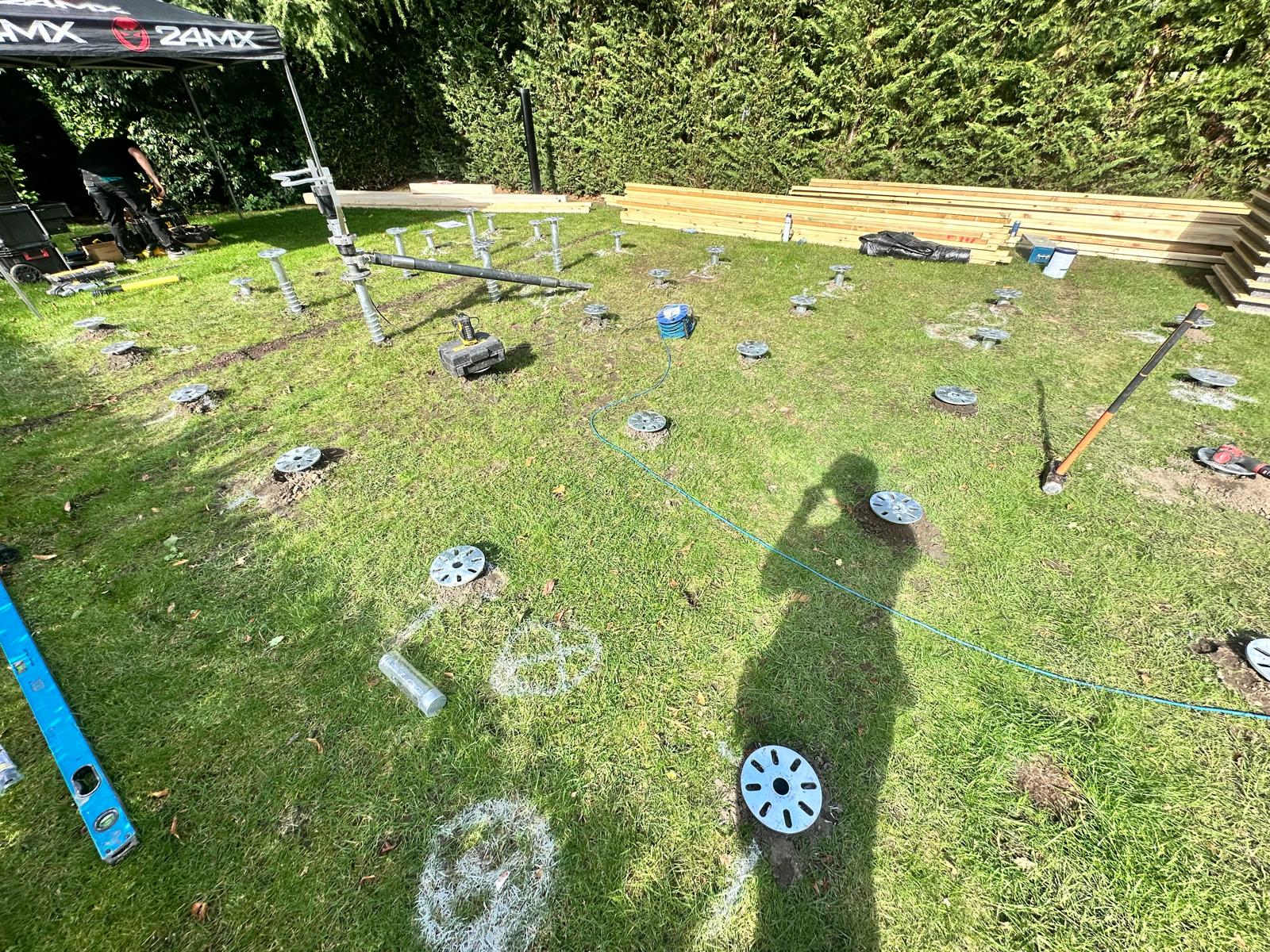
Instead of excavating to create a large flat base, screws are driven into the ground at planned positions and to a specified depth. Brackets and connection details then allow the supporting frame to be set accurately above. The slope is managed in the foundation design, not buried under a larger amount of concrete.
This approach changes the job in important ways. There is very little spoil. There is no curing time. The installation can be completed quickly, and the base can be ready for the structure the same day. For garden room builders, that means fewer programme gaps. For property owners, it means less disruption and a tidier site.
How ground screws deal with sloping ground
The key benefit on a slope is adjustability and precision. Each point can be installed to suit the ground level at that exact location while still contributing to a level, consistent finished datum above.
That is especially useful where the fall across the garden is enough to make a conventional slab expensive or awkward, but not so extreme that a more complex retaining solution is needed. Many garden room projects sit in this middle ground. They are not impossible sites. They just need the right foundation method.
Ground screws also reduce the amount of disturbance to the garden itself. If you are building in a landscaped rear garden, or near boundaries, fences and existing patios, that matters. Heavy excavation can quickly turn a neat job into a site recovery job. Screw pile installation is far more controlled.
There are limits, of course. Very steep sites, poor access for equipment, unstable ground or projects with unusual loading may need a more detailed engineering approach. That is not a weakness of the system. It is simply how foundation work should be handled - based on the actual site, the actual structure and the actual load.
What makes a good sloping garden foundation
A good result is not just about choosing screws over concrete. It is about proper specification and installation.
Screw size, length and bracket type need to suit the structure and the ground conditions. The layout has to match the load paths of the building above. The installation needs to be set out accurately so the finished foundation is square, level and ready for the next trade. On a slope, small errors are less forgiving. If positions are out, the frame install becomes harder. If heights are inconsistent, the correction work starts immediately.
This is where specialist experience matters. Garden rooms and annexes are not generic structures. They have known loading patterns, known build tolerances and known programme pressures. A contractor who installs these foundations regularly understands what the build team needs when they arrive on site.
Ground screws vs concrete on a slope
The practical comparison is straightforward. Concrete can be familiar, but familiarity is not the same as efficiency.
On sloping gardens, concrete often means excavation, forming, levelling, waste removal and waiting for cure time before loading the base. If the access is poor, each of those steps gets more expensive or more awkward. Bad weather can also slow the process.
Ground screws remove most of that friction. No excavation. No concrete wagon. No wet trade dependency. No waiting around for a slab to cure. Installed properly, the foundation is ready to build on straight away.
There is also a quality point here. A sloping site needs accuracy. Ground screws are installed to a planned layout and level, which gives a reliable starting point for the structure. That precision is a major advantage for modular builds, timber frames and garden rooms where the foundation tolerance affects every stage above.
Cost depends on the site. On some simple, flat locations, traditional methods may still stack up. On sloping gardens, the balance often shifts once you account for digging, spoil disposal, access issues and programme delay. The cheapest-looking option at quote stage is not always the cheapest by completion.
When this foundation solution for sloping gardens makes the most sense
Ground screws are particularly well suited to garden rooms, annexes, offices, studios and similar outdoor structures where speed and clean installation matter. They are also a strong fit where access is restricted and where keeping disturbance low is part of the brief.
They make sense for trade installers who want a foundation partner that delivers a ready-to-build result on schedule. They also suit homeowners who do not want their garden turned into a groundwork site for longer than necessary.
If the structure is being installed close to trees, boundaries or existing landscaping, reduced excavation is another practical advantage. It does not remove the need for proper planning and assessment, but it can reduce the impact of the work significantly.
What to check before choosing a system
Any credible contractor should want the basics first. What is the structure? What is the footprint? What are the loads? What is the fall across the site? What is access like? What do the ground conditions look like?
That information shapes the specification. It also prevents overpromising. Not every sloping site is the same, and no serious foundation contractor should pretend otherwise. The right answer may be straightforward, or it may need testing and more detailed planning.
Load testing can also be part of the process where required. That gives confidence that the proposed screw specification suits the site conditions, particularly where the ground is variable or the structure is carrying more than a standard garden room load.
The value of a build-ready result
For most customers, the real advantage is not the screw itself. It is what the screw allows. Fast installation. Clean working. Accurate levels. Immediate readiness.
That matters because every foundation should serve the build above it. A garden room installer does not want to inherit a base that still needs correcting. A homeowner does not want uncertainty at the first stage of the job. A proper foundation should remove risk, not pass it on.
That is why specialist installers focus so heavily on setting-out, specification and finish quality. The foundation is not a standalone product. It is the datum for everything that follows.
For sloping gardens, that makes ground screws a very practical answer. They do not ignore the complexity of the site. They manage it directly, with less mess and less delay than traditional alternatives. Companies such as Ground Down have built their service around that reality - accurate, ready-to-build foundations for the kinds of garden structures that need to stay on programme.
If your site slopes, do not assume the answer is more digging and more concrete. The better route is often the one that gets the levels right first time and leaves the rest of the build free to move.