When a garden room build goes off track, the problem often starts below floor level. Too much spoil. Wet concrete. Delays waiting for a base to cure. Or a foundation that is close enough on paper but not quite level, square or ready when the installer arrives. Clean foundation installation for gardens solves that problem at the source.
For garden rooms, annexes and similar outdoor structures, the job is not simply to hold weight. It is to create a precise, build-ready platform without turning the site into a groundworks project. That matters to trade installers working to a schedule and to homeowners who do not want their garden dug up for days on end.
What clean foundation installation for gardens actually means
A clean installation is not marketing language. It is a practical standard. It means minimal disruption, accurate setting out, no unnecessary excavation and a foundation that is ready for the structure above on the same day.
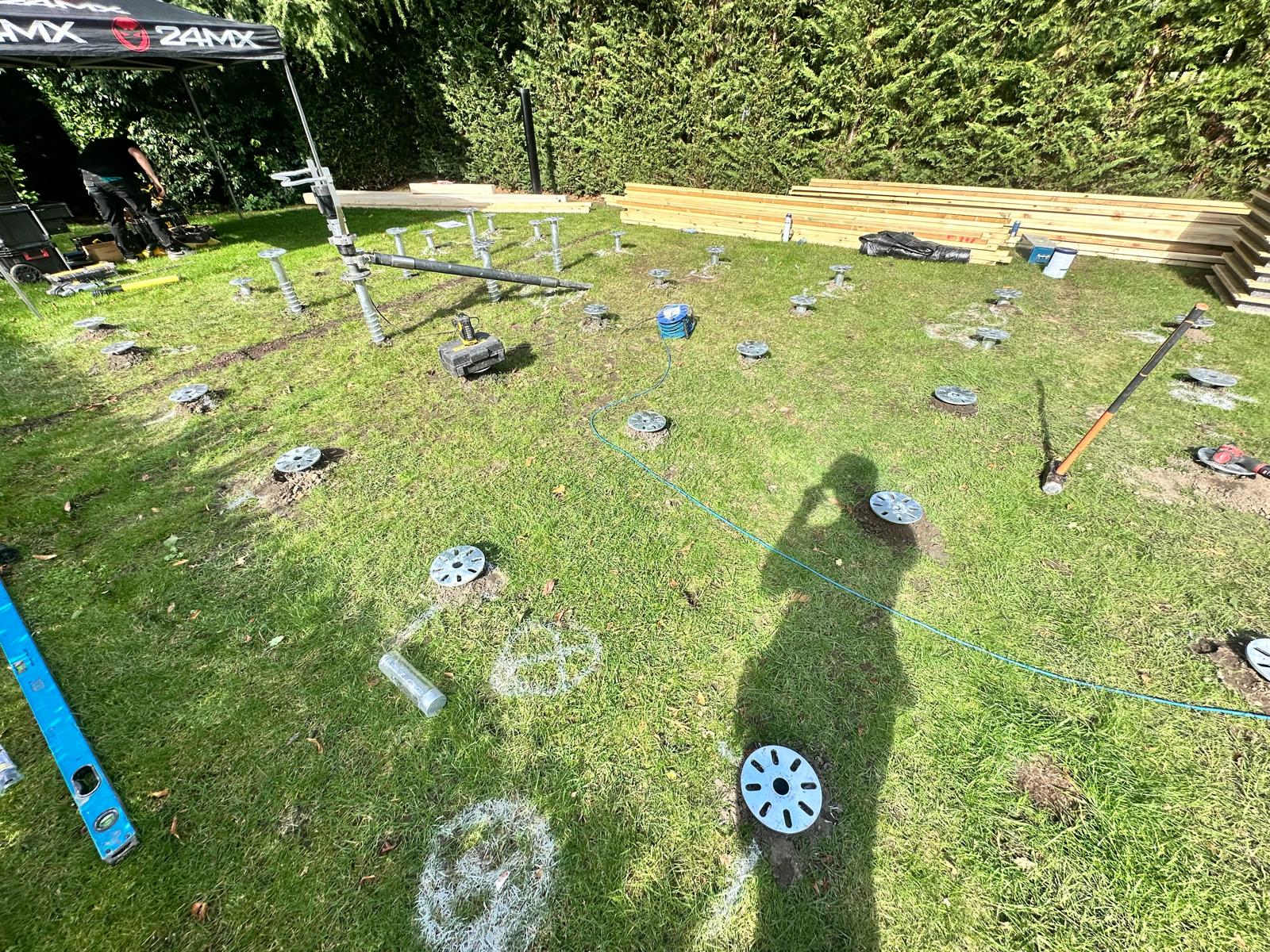
In real terms, that usually points away from traditional concrete and towards ground screws. Rather than digging out large areas, bringing in aggregate, pouring concrete and waiting for cure time, screws are mechanically installed into the ground at the correct positions and depths. The bracketed tops are then set to the required levels for the building frame.
That changes the whole feel of a project. Less spoil to remove. Less noise from extended groundwork. Less risk of weather slowing things down. Most importantly, the build team can work from a known, measured base instead of hoping the slab is right once it has set.
Why garden projects need a cleaner approach
Garden builds are rarely carried out on wide-open commercial sites. They happen behind homes, through side access, near fences, patios, planting and neighbouring boundaries. Every part of the process needs to work within those limits.
Concrete can still be suitable in some cases, but it brings baggage. Access for machinery or delivery can be awkward. Excavation creates mess immediately. Wet works add another phase to manage. If rain arrives at the wrong time, or levels need correcting, the programme stretches.
For a garden room company or installer, those delays are expensive. You may have joiners, electricians and fit-out teams booked in. For a homeowner, it means more disruption and more uncertainty. A clean foundation system reduces both.
That is why specialist installers now favour systems that are designed around speed and precision rather than heavy site preparation. No concrete. No excavation. No waiting around for the base to become usable.
How ground screws make clean foundation installation for gardens possible
Ground screws work because they turn foundation work into a controlled installation process. Each screw is selected for the load and ground conditions, then driven into place using specialist equipment. Once installed, it can be load-bearing immediately.
The advantage is not just cleanliness. It is consistency. With the correct specification and setting out, ground screws give a repeatable method for forming level support points across the footprint of a garden building. That matters far more than most people realise. If the foundation is out, every trade above it spends time compensating.
On a well-run project, screw positions are set out from the building design, checked for square, installed to the required depth and adjusted to achieve the right finished height. The end result is a base that is ready for timber or steel subframes without the usual lag between groundwork and superstructure.
There is a technical side to this. Screw length, shaft diameter, bracket type and spacing all need to suit the job. Soil conditions matter. Building loads matter. Access matters. A small garden office and a larger annexe do not demand the same solution. Clean installation only works properly when the foundation design is right in the first place.
Where clean foundations outperform concrete
The biggest gain is time. A screw pile installation can often be completed in hours, not days, with the structure ready to start straight away. There is no cure time, so scheduling becomes much tighter and easier to control.
The second gain is site condition. There is little to no spoil, no poured slab and far less disturbance to the surrounding garden. That is valuable on finished plots where patios, lawns and planted areas need to stay intact.
The third gain is precision. Concrete can be accurate when done well, but it depends heavily on excavation, formwork and finishing all going to plan. Ground screws are installed to set positions and levels with the end use in mind. For garden room builders, that is a major operational benefit.
There are trade-offs. Very poor access, unusual obstructions underground or highly variable ground may require extra assessment. Not every site is identical. That is exactly why specialist advice matters. The right installer will assess the conditions, specify the correct screw and confirm what the build above needs before work starts.
The process behind a build-ready result
A proper foundation job starts with information, not machinery. The installer needs the building size, intended use, likely loads and site constraints. Ground conditions must also be considered, whether from experience, site inspection or load testing where required.
Once the specification is clear, setting out becomes critical. This is where rushed operators get found out. The foundation points must match the building design exactly. Line, level and squareness are not optional extras. They are the job.
Installation itself is fast, but speed is only useful when paired with control. Screws are driven in using purpose-built equipment, then cut or adjusted to the right height with the correct brackets fitted. Final checks confirm the base is ready for the next trade.
For installers and garden room companies, this is what removes friction from the programme. You are not returning days later to find out whether the slab is usable. You have a completed foundation system that is ready when the team arrives.
Choosing the right partner for clean foundation installation for gardens
This is a specialist category. It should be treated that way. A contractor who understands garden room foundations specifically will look at more than the footprint on a drawing. They will ask about structure type, access, finished floor level, edge clearances and ground variation across the site.
That expertise shows up in the details. Correct screw sizing. Suitable bracket selection. Accurate setting out. Honest advice on whether the site is straightforward or needs testing first. These are not add-ons. They are what make the foundation reliable.
It also helps to work with a contractor who can support different routes to delivery. Some projects need full supply and installation. Others suit supply-only for competent trade teams. In either case, the technical side needs to be clear. Guesswork on foundations is expensive once the building starts.
Ground Down operates in that specialist space, focused on garden room and outdoor structure foundations with a practical, build-first approach. That kind of specialisation matters when the aim is not just to install screws, but to hand over a base that is done properly.
When a cleaner foundation is the smarter commercial choice
For trade customers, the decision is usually simple. A cleaner foundation reduces programme risk, keeps sites more manageable and helps protect margin by cutting wasted time. Less disruption below ground means fewer knock-on issues above it.
For homeowners, the value is just as clear. You keep more of the garden intact, the build starts sooner and the process feels controlled rather than chaotic. That is a better experience from the first day on site.
Price always matters, but it should be judged against the whole job, not just the line item for foundations. A cheaper option that creates delays, mess or remedial work is rarely cheaper by the time the structure is finished. Fast and accurate usually wins.
The best garden builds start with a foundation that nobody needs to think about again. That is the point. If the base is level, square, correctly specified and ready on time, everything above it gets easier. Choose the system and the installer that give you that result with the least disruption possible.