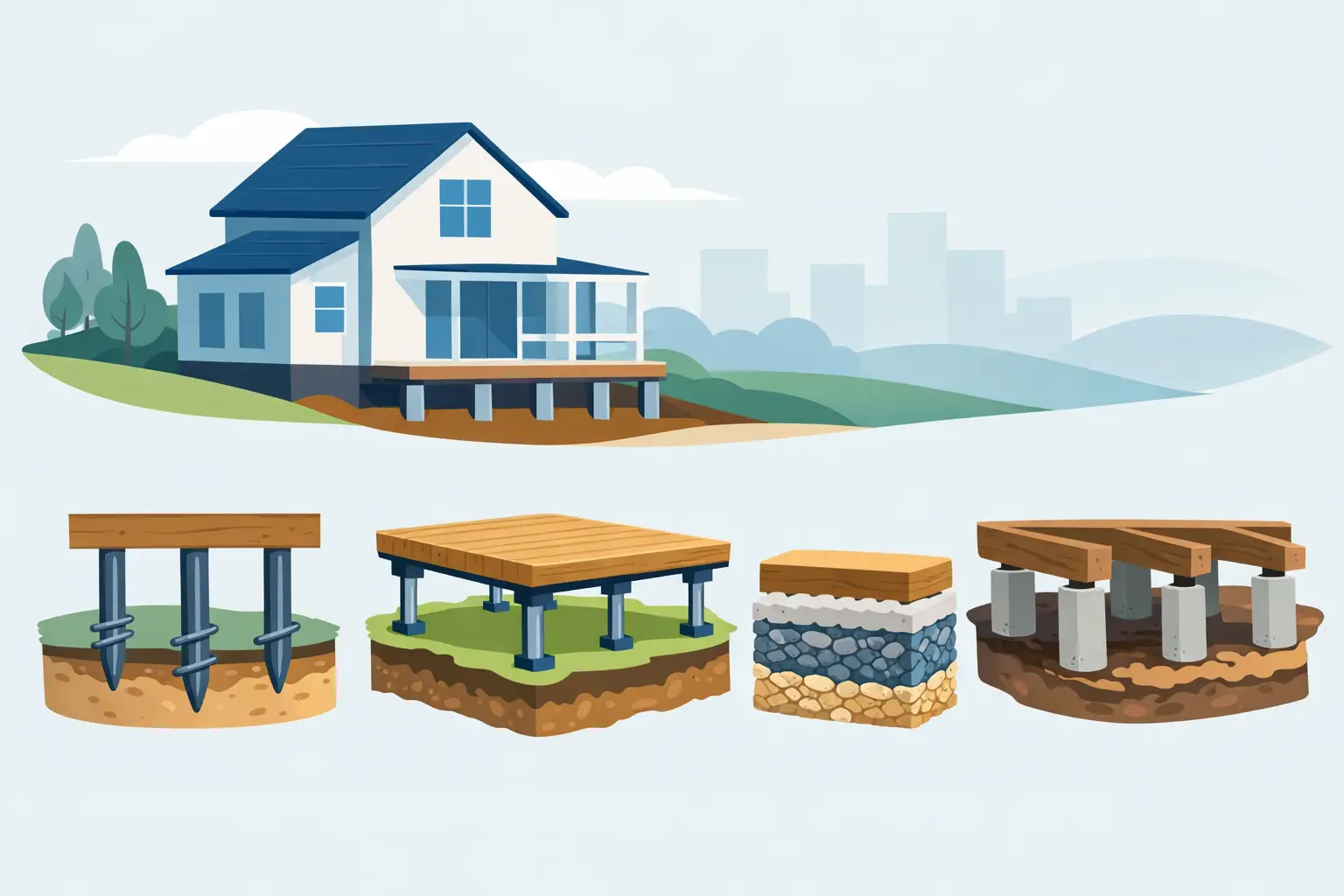
If you are pricing up a base for a garden room, annexe or outdoor building, the best alternatives to concrete foundations are usually the ones that remove delay, reduce mess and still give you a precise, load-bearing result. That rules out a lot of theory very quickly. What matters on site is simple - can it be installed accurately, does it suit the ground, and is it ready to build on when the installer leaves?
For most lightweight to medium-weight structures, concrete is not the only serious option. In many cases, it is not the most efficient one either. Traditional concrete slabs and pads still have their place, but they bring excavation, spoil removal, curing time and more room for site disruption. If the goal is a clean, level, square foundation with dependable setting-out, there are better routes.
What makes a good alternative to concrete foundations?
A genuine alternative has to do more than avoid pouring concrete. It needs to support the structure properly, suit the soil conditions, and work with the building system above. Garden rooms and similar structures are especially unforgiving here. If the base is out, the whole build feels it.
Speed matters, but not at the expense of accuracy. The best systems are installed to a clear layout, achieve the required load capacity and leave the site ready for the next trade. They also need to make sense commercially. A cheaper option on paper can become expensive if it adds labour, rework or programme delays.
Ground screws - the strongest all-round option
When people ask about the best alternatives to concrete foundations for garden rooms, ground screws are usually the first system worth serious attention. For the right structure and the right ground, they solve most of the problems associated with traditional bases.
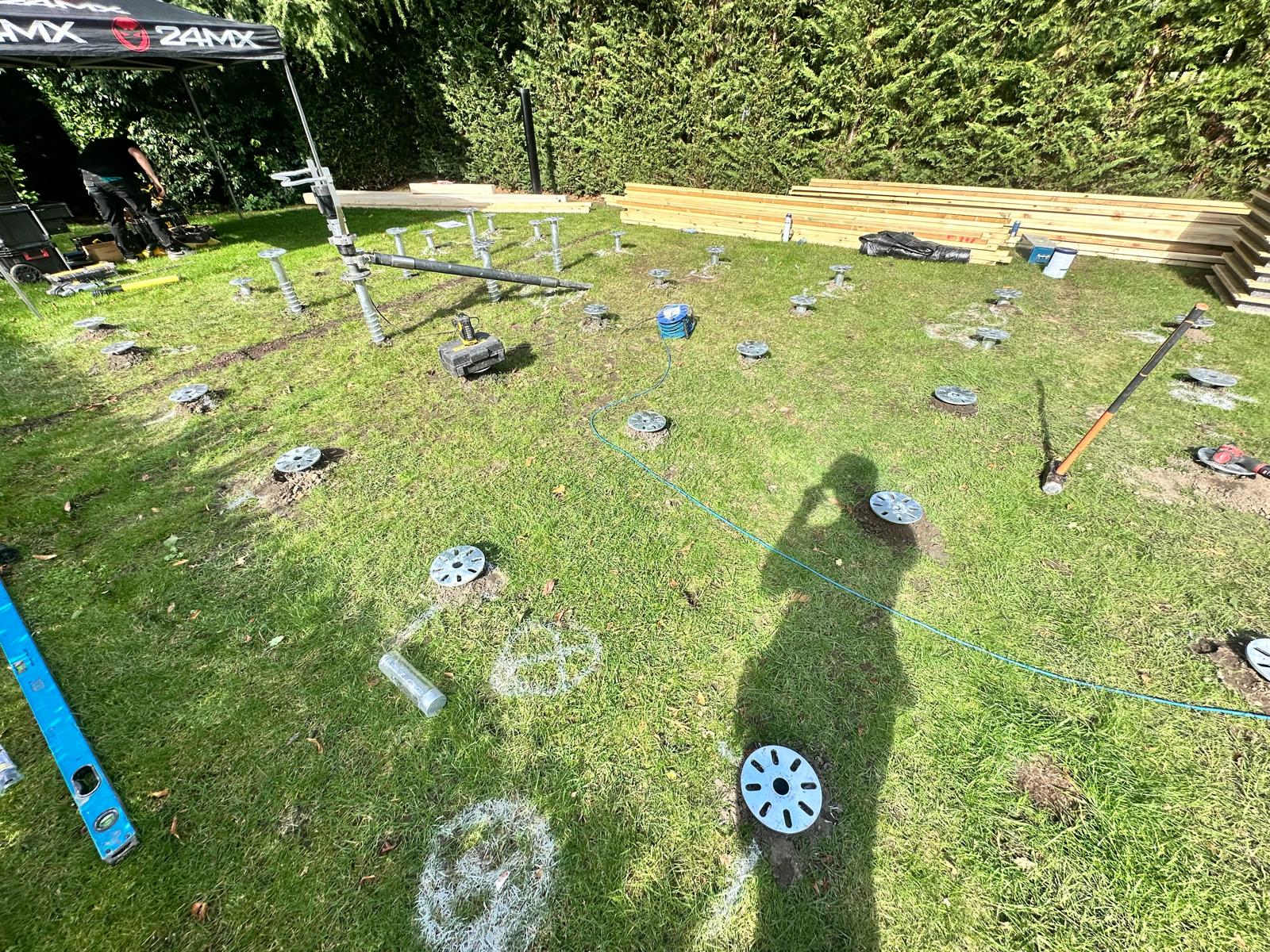
Ground screws are mechanically installed steel foundation elements driven into the ground to a specified depth and torque. There is no excavation in the usual sense, no wet trade, and no waiting for a slab to cure. Installed properly, they create a build-ready platform the same day.
That speed is a major advantage, but it is not the only one. Ground screws also allow for precise height adjustment and clean, repeatable setting-out. On projects where access is tight, gardens are finished, or clients want minimal disruption, that matters. You are not digging out half the plot just to create a base.
They are especially well suited to garden rooms, annexes, studios, offices and other outdoor structures where the building loads are known and the substructure can be designed around the screw layout. They also perform well on sloping sites, where concrete often becomes more labour-intensive and harder to keep efficient.
The trade-off is that screw specification needs to be done properly. Diameter, length, bracket type and spacing all depend on the structure and the ground. This is not a product to guess with. The system works best when it is matched to the project, and where required, supported by load testing and experienced installation.
Precast concrete pads - simple, but limited
Precast pads are often considered when someone wants to avoid a full poured slab. The idea is straightforward - use a series of factory-made concrete pads beneath the structure rather than casting a full base on site.
This can work for smaller, lighter buildings on stable, well-prepared ground. It reduces wet works and may cut down on curing delays if the pads are simply bedded into place. For straightforward sheds and some timber buildings, it is a familiar option.
But it is not a direct replacement for a properly engineered foundation system. Pads still rely heavily on ground preparation, levelling and consistent bearing conditions. If the site is uneven, soft or variable, they can become unreliable quickly. They also do not offer the same tolerance control or adaptability as ground screws.
In practice, precast pads tend to suit basic structures rather than higher-spec garden rooms where accuracy matters. If the building supplier expects a tight foundation tolerance, pads may not be enough.
Helical piles and mini piles - strong, but often more than you need
Piled solutions sit in the same broad family as ground screws, but not all piles are equal in terms of practicality for domestic outdoor buildings. Helical piles and mini piles can deliver excellent load performance, especially on challenging ground, but they are often specified for heavier structural demands.
That means they can be a very good option where soil conditions are poor or where the building loads are beyond what a lighter foundation system should carry. On some annexes or more structural projects, that extra capacity is exactly what is needed.
The downside is complexity and cost. Some piled systems require larger equipment, more invasive working methods or additional concrete at pile caps. For a standard garden room, that can be more foundation than the project really needs. Good engineering is not about using the biggest system available. It is about using the right one.
Timber sub-bases - useful in niche cases
Timber bearer systems on pads or short supports are sometimes used as an alternative where speed and low upfront cost are the main drivers. They can be suitable for very small garden buildings, temporary structures or low-value projects where long-term precision is less critical.
For premium garden rooms, they are rarely the strongest answer. Timber close to ground level introduces more variables around moisture, movement and lifespan. Even pressure-treated components have limits, particularly if ventilation, drainage and detailing are not handled well.
That does not make timber bases wrong across the board. It just makes them less dependable where clients expect a clean, permanent foundation that will still be doing its job years down the line.
Adjustable pedestal systems - good above hard surfaces
There is another category worth mentioning, though it applies to fewer jobs. Adjustable pedestals can work well where a structure sits over an existing stable hard surface, such as a sound concrete slab or paved area with adequate bearing capacity. They allow for levelling and service runs without the need for a full new poured base.
The limitation is obvious. They depend on what is already there. If the slab beneath is poor, underspecified or uneven, the pedestal system simply inherits those problems. They are a useful support method in refurbishment-style situations, not a universal answer for new foundations.
Why ground screws are now the preferred choice for many garden room builds
Most buyers are not looking for theoretical options. They want the foundation that gets the project moving with the least friction. That is why ground screws have become the preferred choice on so many garden room and annexe projects.
They cut out multiple problem stages at once. No spoil to remove. No concrete wagons. No curing window holding up the build. No broad excavation turning a tidy garden into a groundworks site. The installer sets out the grid, installs the screws to the required positions and levels, and the structure can move on.
For trade customers, this is largely a programme decision. Delays cost money. Waiting on weather, drying times or follow-on corrections creates knock-on issues across the whole job. For homeowners, the advantage is usually disruption. Less mess. Less noise. Less damage to the surrounding area.
There is also a quality point here that should not be ignored. A specialist screw installation done properly is a controlled process. It is not improvised with whatever happens to be on site that day. That consistency is a big part of the appeal.
Choosing the right alternative for your project
The right foundation depends on four things - the structure, the site, the soil and the tolerance required by the build above. If you are installing a simple shed on firm, level ground, several options may be viable. If you are building a high-value insulated garden room with strict dimensional requirements, the shortlist gets tighter.
That is where many projects go wrong. People compare foundation types by headline price only, without allowing for excavation, spoil removal, curing time, access issues, reinstatement and the cost of any inaccuracy. A system that looks cheaper at the start can become slower and messier by the end.
For most modern garden room applications, ground screws are the best balance of speed, cleanliness and technical performance. Not in every single case, because there are always site-specific exceptions, but often enough that they should be considered first rather than last.
A good foundation should remove risk, not add it. It should arrive on schedule, suit the building, and leave the next stage ready to start. That is the standard worth judging every option against.
If you want a base that respects the programme as much as the structure, start with the option that gets it done properly and leaves the site ready to build that day.