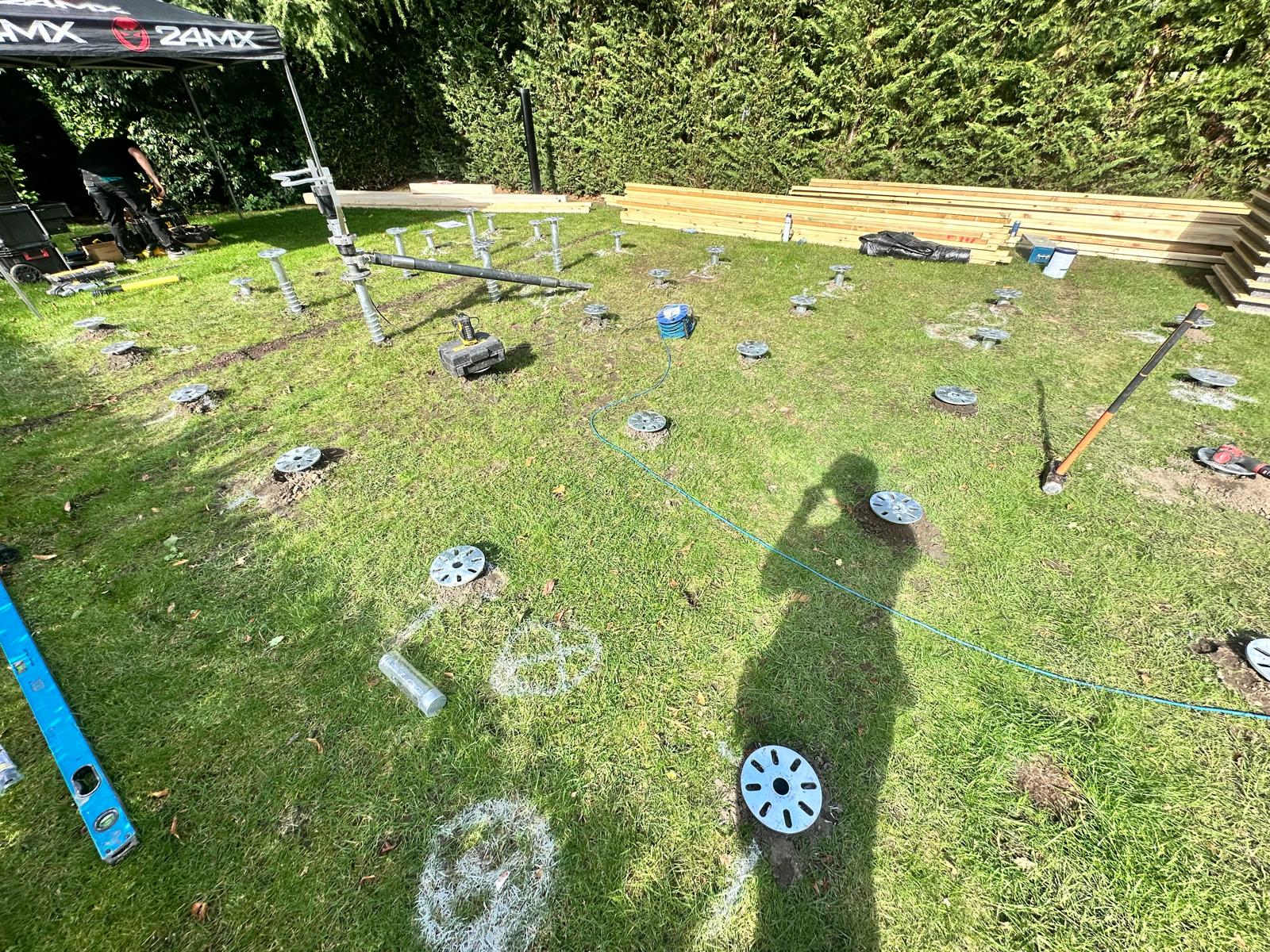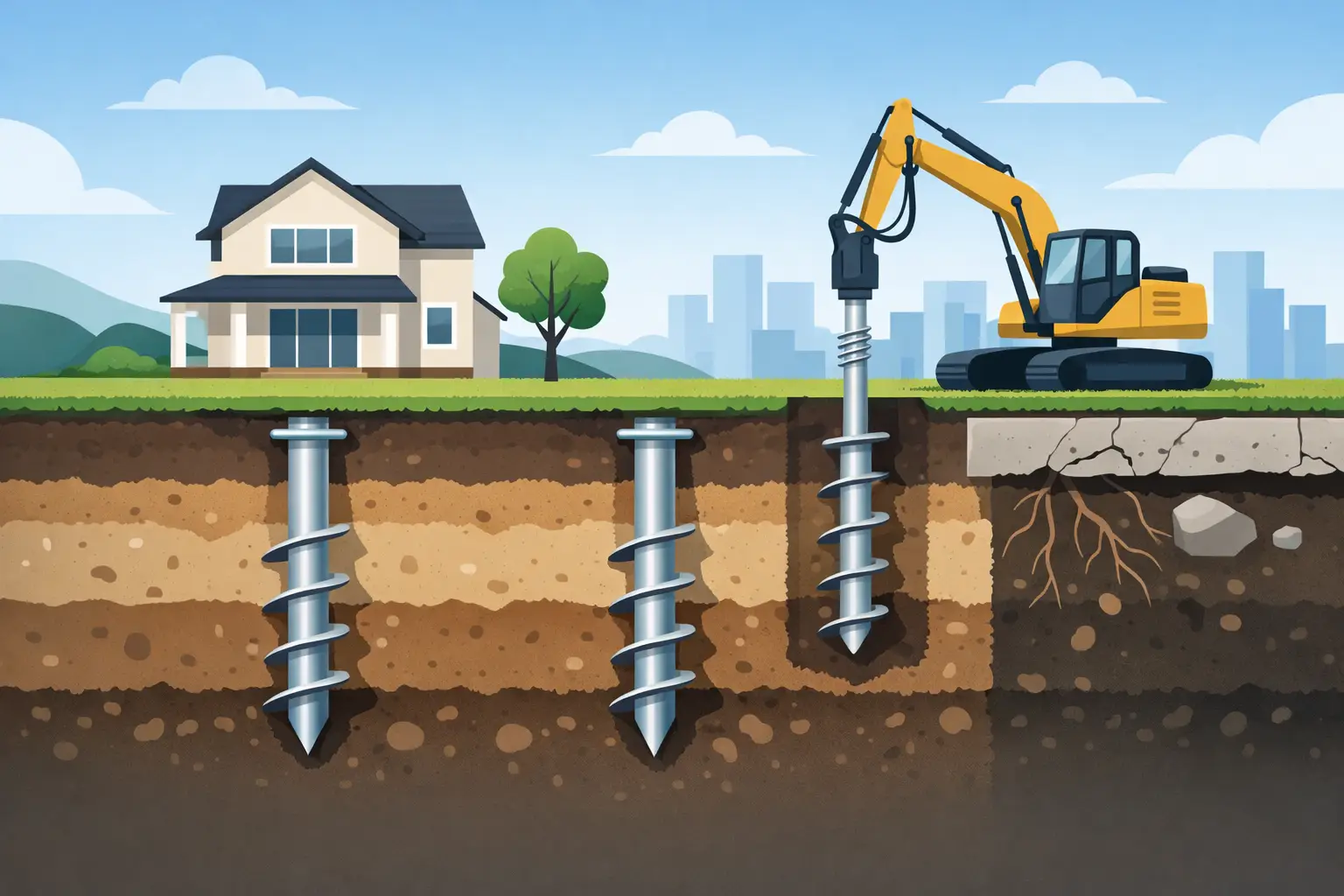
If you are planning a garden room or annexe, one question matters early: are screw pile foundations permanent enough for the job, or are they a temporary shortcut? That concern is fair. The foundation is not the place to guess.
The short answer is yes - screw pile foundations are designed to be a permanent foundation system when they are specified correctly, installed properly and matched to the ground conditions and structure above. They are not a make-do option. For many garden rooms, annexes and lightweight to medium-weight structures, they are a long-term engineered solution.
That said, permanence is not just about the steel in the ground. It depends on design, corrosion protection, soil conditions, loading and installation quality. Done properly, screw piles can deliver decades of service. Done badly, like any foundation system, they can create problems.
Are screw pile foundations permanent in real terms?
In real construction terms, permanent means the foundation is intended to remain in place for the design life of the structure. It is not there to prop something up for a season and then be removed. A properly engineered screw pile system is installed with that exact purpose.
This is where people sometimes get the wrong impression. Because screw piles go in quickly and without excavation, they can look less substantial than a big concrete pour. But speed of installation is not the same as lack of permanence. The load-bearing capacity comes from the pile design, the depth achieved, the soil interaction and the structural connection above - not from how messy the job looks on day one.
For a garden room builder or property owner, the better question is usually not whether screw piles are permanent in theory, but whether they are suitable as the permanent foundation for this specific build on this specific site. That is where proper specification matters.
What makes a screw pile foundation last?
The first factor is the steel itself. Screw piles are manufactured steel foundation elements, typically with protective coatings designed to resist corrosion over time. The quality of the pile and its coating has a direct impact on lifespan. Cheap, poorly protected piles are a false economy.
The second factor is ground conditions. Soil type changes everything. Firm, stable ground behaves differently from made ground, soft clay or waterlogged areas. The correct pile diameter, shaft type, length and helix arrangement need to suit the site. If they do, the piles can achieve the required load capacity and long-term stability. If they do not, the fact that they are steel will not save the project.
The third factor is installation. A screw pile should be installed to the right depth and torque, using appropriate equipment and a clear understanding of the load path. This is not a case of simply winding metal into the earth and hoping for the best. Professional installers use installation data and, where needed, load testing to confirm performance.
Then there is the connection above ground. Even a correctly installed pile can be undermined by poor bracketry, inconsistent levels or a weak interface with the supporting frame. A permanent foundation is a system, not just a component.
Lifespan: how long can screw piles stay in the ground?
A well-specified screw pile foundation can last for decades. Exact design life varies depending on product specification, coating, site conditions and structural use, but permanent systems are commonly intended for long-term service comparable to the expected life of the building they support.
That does not mean every site gives you the same outcome. Corrosion rates differ from one location to another. Aggressive soils, poor drainage and certain contaminants can reduce service life if they are not accounted for in the design. This is why blanket claims are not especially useful. The right answer is always site-specific.
For garden rooms and similar structures, that level of permanence is often more than sufficient. If the building is intended to stay in place as a long-term asset, the foundation should be designed on the same basis. A proper screw pile installation can do that.
Why people assume concrete is more permanent
Concrete has history on its side. Most people have seen concrete bases for years, so they feel familiar and fixed. Screw piles still get treated by some as the newer option, even though helical foundation systems are well established.
The truth is that permanence is not measured by volume. A concrete slab can fail if it is poorly prepared, badly poured or affected by ground movement. It can crack, settle or end up out of tolerance. More material does not automatically mean better performance.
Screw piles take a different route. Instead of excavating, pouring and waiting for cure time, they transfer load through engineered steel elements driven to the required depth. On the right project, that gives you a foundation that is faster, cleaner and more predictable without sacrificing long-term performance.
For garden rooms in particular, that matters. You need a base that is level, square and ready to build on. Delays, site spoil and weather-sensitive wet trades do not improve the finished result. They just slow the programme down.
When are screw piles a good permanent choice?
They are often an excellent permanent choice for garden rooms, annexes, modular buildings, studios, home offices and similar outdoor structures. They work especially well where access is tight, excavation is awkward, spoil removal is undesirable or the client wants minimal disruption.
They also suit projects where speed matters. A same-day build-ready foundation is not just a convenience. For builders, it helps with scheduling, labour planning and handover. For homeowners, it means less mess and less time with the garden turned into a work site.
On sloping or uneven ground, screw piles can also simplify the job. Rather than forcing the site to suit a concrete solution, the foundation can be set out precisely to suit the build.
That said, suitability still depends on loading and ground conditions. Not every project takes the same pile, and not every site wants the same solution. Heavier structures, unusual load cases or difficult soils may require more technical assessment. Sometimes screw piles are still the right answer. Sometimes another system may be better. Good advice starts with the site, not the sales pitch.
Are there cases where permanence is limited?
Yes. There are situations where the design life may be affected, or where extra measures are needed.
Highly corrosive ground conditions are one example. If the soil environment is aggressive, pile specification needs to reflect that. The same goes for locations with unusual moisture conditions or contamination. In these cases, a proper assessment is essential.
Poor installation is another risk. If piles are undersized, installed to inadequate depth or fitted without proper torque control, the result is not a permanent solution. It is just a bad install. The same principle applies to any foundation type.
There is also a difference between a removable system and a permanent one. Screw piles can be removed if a structure is genuinely temporary, which is one of their practical advantages. But removability does not mean they are only temporary. It means the system is versatile.
What should you ask before choosing screw piles?
Start with the basics. Ask what loads the foundation is being designed to carry, what pile specification is proposed and how the ground conditions are being assessed. Ask how levels and tolerances will be controlled, and whether load testing is required.
You should also ask about corrosion protection and expected service life for your site conditions. A serious foundation contractor will be clear about what is being installed and why. Vague answers are a warning sign.
For garden room companies and installers, consistency matters just as much as technical capacity. You need a partner who can deliver accurate set-out, dependable scheduling and a build-ready finish. A foundation can be permanent and still be a headache if it turns up late or out of square.
The practical answer
So, are screw pile foundations permanent? Yes - when they are designed for permanent use, matched to the ground, and installed properly, they are a genuine long-term foundation system.
That is the point worth holding onto. The question is not whether screw piles look permanent enough. The question is whether the foundation has been specified and installed properly for the building you want to keep. Get that right, and a screw pile foundation is not a compromise. It is a clean, accurate and durable way to start the job.
If you are comparing options for a garden room or annexe, focus less on what feels traditional and more on what gives you a foundation that is right, ready and done properly from the outset.