Clay catches people out. A site can look dry and firm in summer, then shift noticeably through a wet winter. That is why one of the most common questions we hear is: are ground screws suitable for clay? The short answer is yes, often they are. But clay is not a one-size-fits-all ground condition, and the right answer depends on the type of clay, moisture levels, load requirements and proper testing before installation.
For garden rooms, annexes and similar outdoor buildings, ground screws can perform very well in clay when they are specified correctly. The mistake is assuming any screw will do, or that clay behaves the same across every site. It does not. Some clay is dense and stable. Some is highly reactive, holding water, shrinking in dry spells and expanding in wet conditions. That difference matters.
Are ground screws suitable for clay in real projects?
Yes - in many cases they are a very practical foundation option for clay ground. The key is that suitability is proven, not guessed. A proper ground screw contractor will assess the site, review the structure loads, select the right screw dimensions and installation pattern, and confirm performance during install.
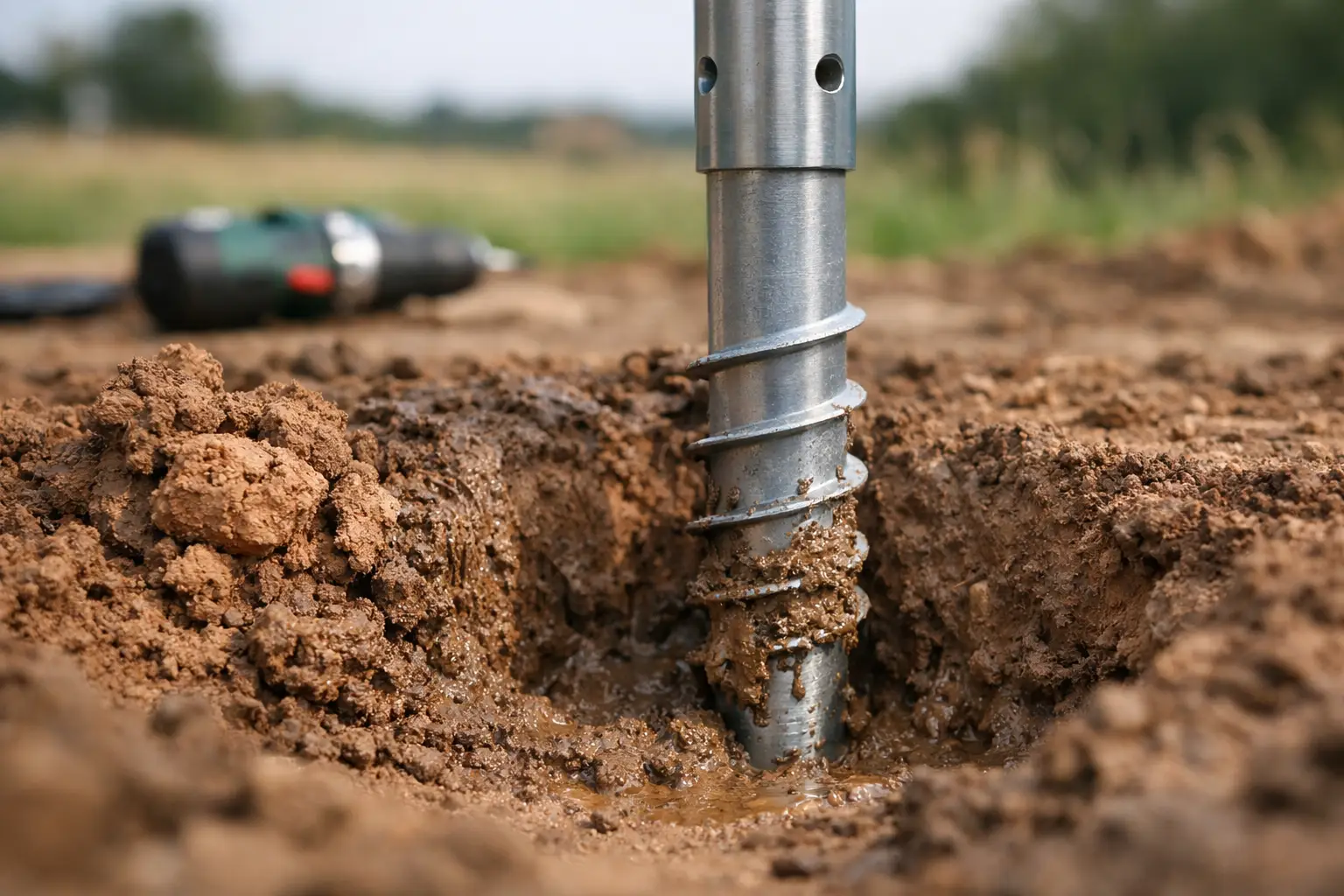
That matters because clay can be stronger than people expect in bearing terms, while still being awkward from a movement point of view. Traditional concrete is not automatically the safer choice. In fact, clay can be one of the reasons clients look for an alternative to excavated foundations. Digging into wet, sticky clay is messy, slow and disruptive. Spoil removal adds cost. Rain makes things worse. Then there is cure time.
Ground screws avoid much of that. No concrete. No excavation. No waiting for a slab to cure before the build can continue. For the right project, that is a major advantage.
Why clay needs a bit more care
Clay soils change with moisture content. When they get wet, they can soften and expand. When they dry out, they can shrink and crack. This is usually where concerns come from, especially on sites near trees or where the ground has a known history of seasonal movement.
That does not rule out ground screws. It means the foundation design needs to account for those conditions. Screw length, shaft size, helix configuration and embedment depth all need to suit the actual ground, not a generic assumption. On some sites, deeper installation into more stable strata is the right answer. On others, a standard arrangement may already be suitable.
This is where contractor experience counts. A ground screw is only as good as the specification behind it.
The type of clay matters
There is a big difference between a firm, compact clay and a highly plastic clay with significant seasonal movement. Made ground over clay also needs care. If the upper layer is inconsistent or previously disturbed, the screw may need to penetrate beyond it to achieve a reliable result.
Chalky clay, silty clay and mixed soils can all behave differently as well. That is why desk-based assumptions are not enough on their own. Site-specific testing gives a much clearer picture.
Trees, drainage and slope all affect the answer
Clay near mature trees can be more susceptible to moisture fluctuation. Poor drainage can leave the ground soft for longer periods. Sloping sites may introduce different load paths and retaining considerations. None of these points automatically make ground screws unsuitable, but they do change the design approach.
A straight yes or no answer without looking at those details is not a serious one.
How ground screws are assessed for clay sites
On a clay site, the process should start with the loads from the building above. A lightweight garden room places very different demands on the ground than a larger annexe with higher imposed loads. Once those loads are known, the next step is to understand the soil profile and installation resistance.
In practice, that often means a site assessment followed by test installation and, where needed, load testing. This is one of the strongest parts of a screw pile system. Performance can be checked directly, rather than relying only on assumed bearing from an excavation.
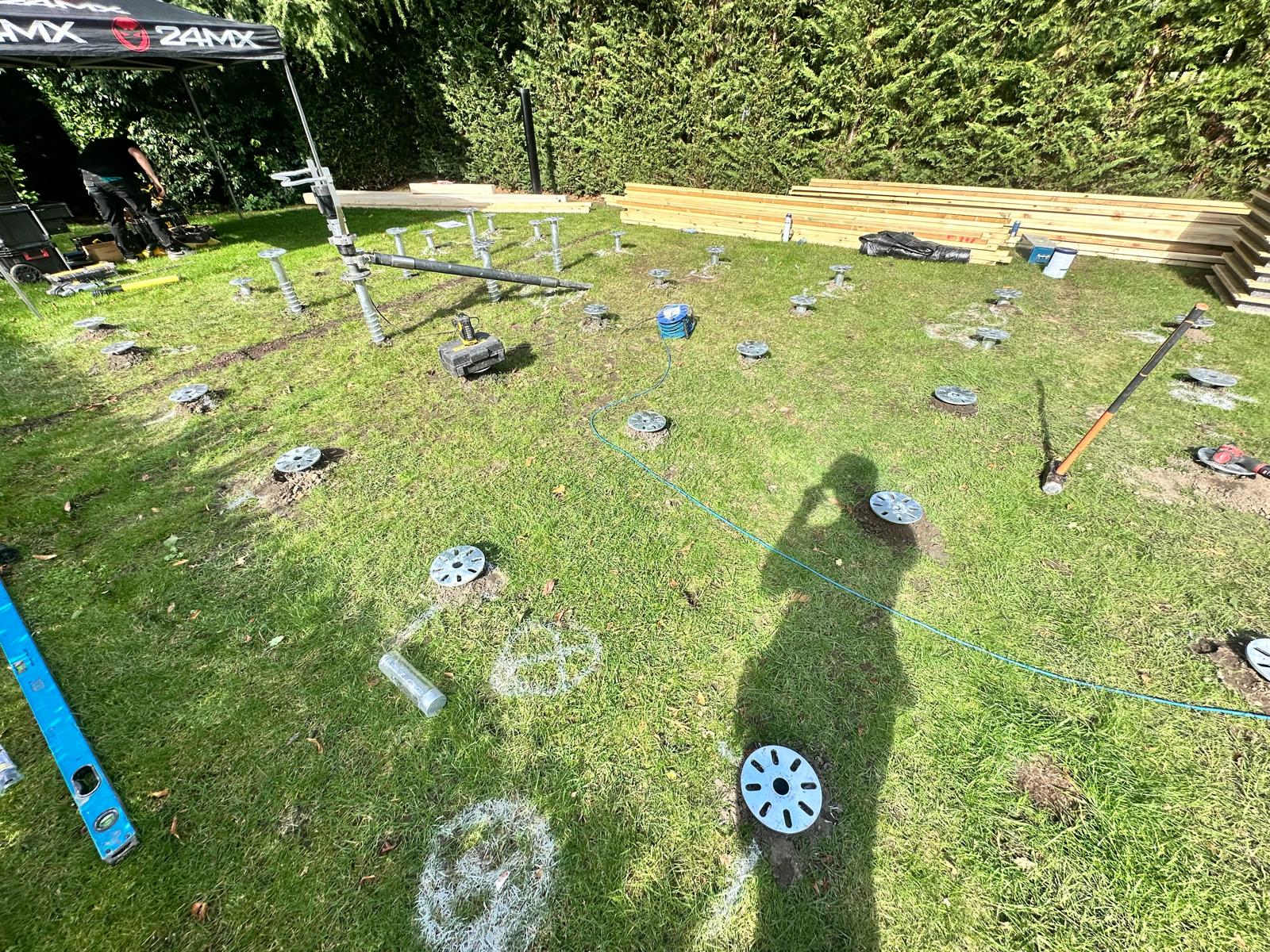
If the screw achieves the required resistance and the layout is designed properly, the foundation can be installed and the frame can be ready to build on the same day. That speed matters to garden room builders working to tight programmes and to homeowners who do not want their garden turned into a muddy site.
When ground screws work well in clay
Ground screws are often a strong option for clay when the structure is relatively light to moderate in weight, access is restricted, and clients want a clean installation with minimal disruption. They are especially useful where avoiding spoil removal and wet concrete logistics makes the job simpler.
For garden rooms, studios, offices and many annex-type structures, that is a common scenario. The screw system can be set out accurately, installed with specialist machinery, and finished level and square for the base structure above. There is no guesswork in slab levels and no waiting around while concrete hardens.
Clay also tends to highlight one of the less discussed benefits of screw foundations: less disturbance to the surrounding ground. Excavation changes the site more dramatically. Ground screws are far more targeted.
When extra caution is needed
There are cases where clay needs a more cautious approach. Highly reactive clay with known movement issues may require deeper screws, revised spacing or additional testing. Sites with very large trees nearby can raise more technical questions around seasonal moisture change. Heavy structures or unusual point loads also need careful engineering.
There are also situations where another foundation solution may be better. If the site has a particularly difficult combination of made ground, buried obstructions, drainage complications and severe access constraints, the best answer depends on the whole project, not just the soil type.
That is the practical view. Ground screws are not a magic fix for every site. They are a high-performing foundation system when matched to the conditions properly.
Ground screws vs concrete on clay
Concrete is often treated as the default because it is familiar. That does not mean it is automatically better on clay. On many sites, concrete bases bring more excavation, more spoil, more mess and more programme risk. Wet weather can slow everything down. Accuracy depends heavily on ground preparation and formwork. If levels are off, the problems carry straight into the build.
Ground screws offer a cleaner and faster route. Installation is precise. The site stays tidier. The base is ready immediately. For garden room contractors, that can remove days from the programme. For homeowners, it means less disruption and a quicker path to a usable building.
The technical point, though, is this: neither concrete nor screws should be chosen on habit alone. Clay rewards proper assessment and punishes assumptions.
What to ask before installing on clay
If you are planning a garden room or annexe on clay, the right questions are simple. Has the site been assessed properly? Has the screw specification been chosen for the actual ground and building load? Is there a plan for testing if the ground is variable? Has seasonal movement been considered, especially near trees?
If the answer to those questions is yes, ground screws are often an excellent fit. If nobody is asking those questions, be careful.
A specialist installer should be able to explain why a particular screw size and layout has been chosen, what resistance is expected during installation, and how the finished foundation will support the structure above. That level of clarity matters more than broad claims.
The practical answer
So, are ground screws suitable for clay? In many cases, absolutely. They can be a fast, accurate and low-disruption foundation solution for clay sites, particularly for garden rooms and similar outdoor structures. But clay needs respect. The right result comes from proper assessment, correct specification and experienced installation.
That is why specialist contractors such as Ground Down put so much emphasis on testing, screw selection and build-ready accuracy. Done properly, clay is not a reason to avoid ground screws. It is simply a ground condition that needs the right foundation approach.
If your site is on clay, the best next step is not to assume. It is to get the ground checked, get the loads reviewed and make the decision based on evidence rather than guesswork.